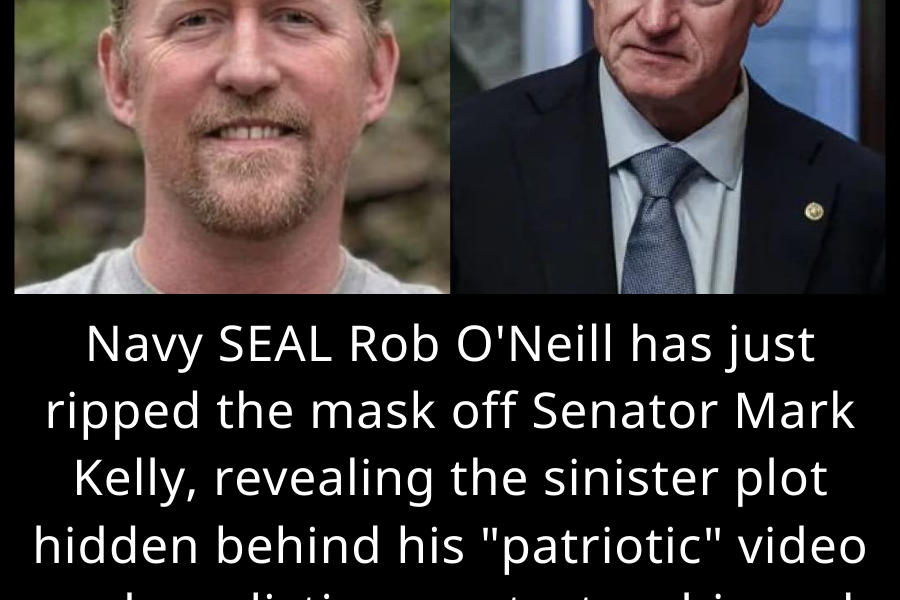
The debate surrounding Senator Mark Kelly’s actions has intensified with the entry of a formidable new voice: decorated former Navy SEAL Robert O’Neill. His accusation is not one of political disagreement, but of a specific, weighty crime: sedition.
O’Neill’s declaration carries immense weight precisely because of his background. He is not a pundit or a politician; he is a warrior who has operated at the absolute sharpest edge of the U.S. military’s command structure. When a man of his experience uses a term like “sedition,” it is not rhetorical flourish. It is a tactical assessment.
His argument cuts to the core of the military’s foundational principle: the chain of command. From this perspective, Senator Kelly’s video—urging troops to preemptively disobey orders from their Commander-in-Chief—isn’t merely political speech. It is seen as a direct assault on the discipline and structure that ensures military effectiveness and, ultimately, national security.
The critical distinction, as highlighted by O’Neill and others, is the difference between a general principle and a specific, unlawful order.
Principle: Every service member is taught they have a duty to disobey a *manifestly* unlawful order (e.g., shooting unarmed civilians).
The Alleged Violation: Kelly and the “Seditious Six” are accused of applying this principle preemptively and politically—instructing troops to be ready to defy a Commander-in-Chief based on hypothetical, undefined “illegal orders.”
From the viewpoint of O’Neill and his supporters, this does not empower the troops; it politicizes them. It inserts a senator’s judgment between a soldier and their President, effectively encouraging the military to fracture along political lines. This is the “sedition” he names—an act he perceives as aimed at undermining the lawfully established authority over the armed forces.
The Pentagon’s investigation into Kelly, due to his retired status, now unfolds against this explosive backdrop. It is no longer just a legal or procedural matter; it is a dramatic clash of ideologies.
* **One side** sees a brave defense of the Constitution against a potential tyrant.
* **The other side**, voiced by O’Neill, sees a dangerous and seditious undermining of the very chain of command that protects the Republic.
O’Neill’s accusation has now framed the controversy in the starkest terms possible: **Patriotism versus Sedition.** This ensures the political firestorm will only burn hotter as the investigation proceeds.