The Doxxing and the Gunshot: When Vigilantism Meets Federal Enforcement
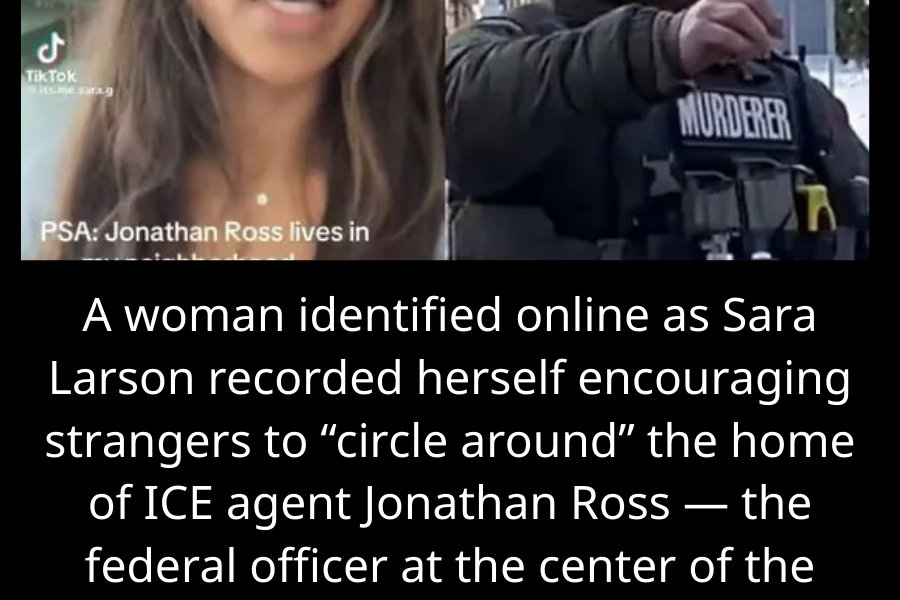
ST. PAUL, Minnesota — The chain of events reads like a dark algorithm of modern conflict: A fatal shooting during an ICE operation. A disputed narrative of self-defense. And then, the digital retaliation: a private citizen, Sara Larson, publicly posting the home address of the federal agent involved, Jonathan Ross, urging others to “circle around” his home.
Now, the wheel has turned again. Larson has been fired from her job and arrested. The story has evolved from a debate over use of force into a stark case study on the consequences of extra-legal vigilantism in the digital age, and the fierce protections surrounding federal law enforcement.
The Catalyst: The Shooting of Renee Good
The incident that sparked this chain remains hotly contested. In late 2025, during a Minneapolis-area immigration operation, ICE Agent Jonathan Ross—a 43-year-old Iraq War veteran—shot and killed Renee Good. According to the Department of Homeland Security’s initial review, Good allegedly attempted to run Ross over with her SUV, forcing him to fire in self-defense.
Community activists and Good’s family have rejected this, framing the shooting as another example of violent, unaccountable immigration enforcement. The case became a flashpoint, further polarizing the already intense debate over ICE’s tactics in the Twin Cities.
The Escalation: From Protest to Doxxing
Enter Sara Larson. Operating from a position of outrage, she moved beyond traditional protest. Using publicly available data and possibly other means, she identified and published Agent Ross’s residential address in online videos. Her call for people to make him “uncomfortable” at his home crossed a critical line from speech into what authorities allege is incitement and harassment.
This act, known as doxxing (publishing private identifying information with malicious intent), represents a digital-age tactic of intimidation. Its intent is to dissolve the boundary between an official’s professional role and their private life, subjecting them and their family to fear and potential harm.
“Doxxing is the domestication of political violence,” explains Dr. Ben Torres, a scholar of digital ethics and law. “It doesn’t throw a brick through a window; it publishes the address and suggests others might. It transfers the risk. For a federal agent, whose home address is protected information for clear security reasons, this isn’t just harassment; it’s a direct threat to operational security and a potent form of intimidation designed to punish them for doing their job. The arrest signals that the state will treat this as a serious offense against its own personnel, akin to threatening a witness or obstructing justice.”
The Consequences: Employment and Criminal Liability
The repercussions for Larson were swift and severe:
-
Termination: Her employer, EastWest Acupuncture, immediately severed ties. For a private business, employing someone engaged in a high-profile, alleged criminal act targeting a federal agent represents an untenable reputational and legal risk.
-
Arrest: Larson now faces potential state and federal charges. These could include:
-
Harassment or stalking under state law.
-
Retaliation against a federal official (a federal felony under 18 U.S.C. § 115).
-
Conspiracy or incitement charges, depending on the interpretation of her “circle around” statements.
-
The arrest sends an unambiguous message: Targeting the private lives of federal agents with the intent to intimidate is a prosecutable crime, not protected political speech.
The Broader Context: The Perilous State of Federal Agents
Agent Ross embodies the complex profile of many in federal law enforcement: a military veteran now in a domestically polarizing role. For his supporters, he is a public servant forced to make a split-second decision. For his detractors, he is the face of a brutal deportation machine.
Doxxing agents has become an increasing tactic used by extremists on both ends of the spectrum, from anti-government militants to radical activists. It aims to deter enforcement by making the personal cost of public service unbearably high.
The legal system is designed to push back hard. Laws protecting federal officials are stringent, and U.S. Attorneys’ offices prioritize such cases to maintain the integrity of federal operations.
The Unresolved Core: The Shooting Itself
Larson’s arrest does not adjudicate the righteousness of Ross’s actions or answer the questions about Renee Good’s death. It simply states that vigilante retaliation, in this form, is illegal.
The official investigation into the shooting by DHS’s Office of Inspector General and potentially the FBI continues. The family’s civil lawsuit is likely pending. Those are the sanctioned channels for accountability.
The Bottom Line
This case is a parable of our times: A lethal confrontation breeds outrage. Outrage curdles into digital retaliation. The state then mobilizes its full force not to re-litigate the original controversy, but to defend its own and punish the retaliation.
Sara Larson sought to hold power accountable by exposing its human address. The state responded by demonstrating that its agents’ addresses are a boundary it will enforce with arrests and job terminations.
The final message is clear: In America, you may debate the actions of a federal agent in the court of public opinion. But you may not, without severe consequence, bring the debate to their front yard. The line between protest and persecution has been drawn, and for now, the law stands firmly on the side of the agent’s doorstep.