The Cleanup Crew Narrative: Deconstructing the ICE Siege Mentality
MINNEAPOLIS / WASHINGTON — The imagery is deliberate and potent: a flood. A mess. A burned-down house. And in this catastrophe, a single, beleaguered hero: the “cleanup crew.” This narrative, crystallized in the recent pro-ICE social media offensive, is more than a defense of Immigration and Customs Enforcement. It is a complete historical and moral recalibration of the last four years of American immigration policy. It frames the current enforcement surge not as a new policy, but as a necessary, heroic correction—a restoration of order after a period of deliberate, catastrophic chaos.
Let’s dissect this worldview, because it is the central political argument driving the most aggressive interior enforcement actions in a generation.
The Core Tenets of the “Cleanup Crew” Doctrine
-
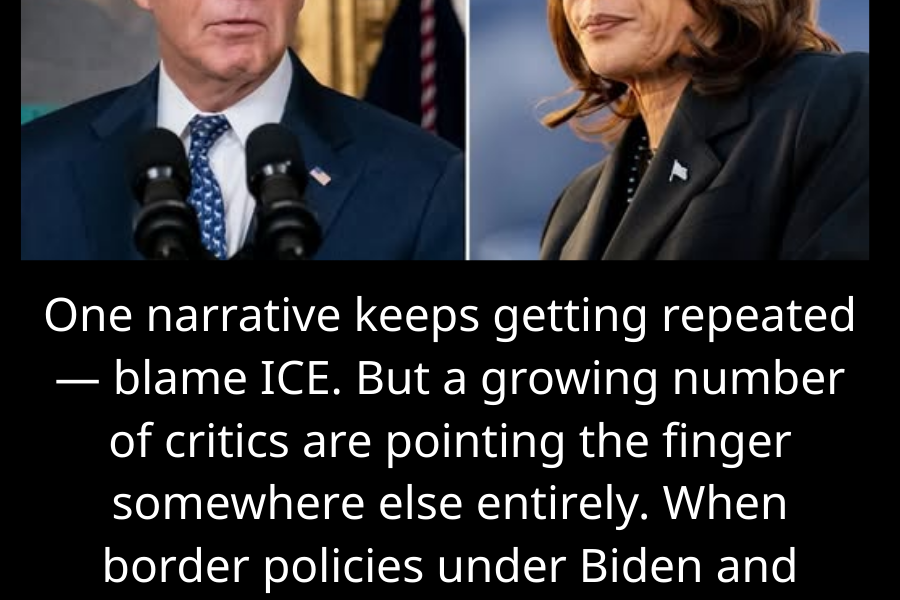
The “Floodgates” Premise: The foundational belief is that the Biden-Harris administration didn’t just change policy; they actively dismantled border security, resulting in an intentional, uncontrolled influx of millions. Metrics like the record number of border encounters are cited not as a complex humanitarian and logistical challenge, but as proof of malicious negligence or open-borders ideology.
-
The “Sanctuary Shield” Corollary: This narrative holds that “sanctuary” cities and states didn’t merely limit cooperation with ICE on constitutional or community-trust grounds, but actively conspired to harbor criminals. Minneapolis, under this view, became a “magnet for the fallout,” a protected zone where immigration law was nullified.
-
The “Bait-and-Switch” Hypocrisy Charge: This is a key rhetorical pivot. It argues that the same political forces that created the crisis (by opening borders and establishing sanctuaries) are now feigning outrage at the consequences (ICE enforcement) to paint the solution as the problem. The protests are framed not as civil rights advocacy, but as political obstruction to protect a voter base (“every criminal removed is one less future Democrat voter”).
-
The Restoration Narrative: ICE agents are recast from enforcement officers into first responders and restorers of the natural order. The “over 10,000 arrests in Minnesota” statistic is wielded not as a controversial sweep, but as a quantifiable measure of cleanup progress. They are the “fire department” arriving at the “burned-down house.”
“This is a siege mentality turned into a mission statement,“ explains Dr. Ben Torres, a historian of American political rhetoric. “It externalizes blame completely. Any negative outcome—street protests, community fear, legal challenges—is not a consequence of ICE’s actions, but residual damage from the prior ‘arson.’ It absolves the ‘cleanup crew’ of all collateral damage. More importantly, it re-writes the purpose of ICE. Its goal is no longer the discrete enforcement of immigration law; it is the re-conquest of American space perceived as lost during the ‘Biden era.’ It’s a myth of national redemption through police action.”
The Flaws in the Frame: What the Narrative Erases
While politically powerful, this worldview requires the omission of several complicating realities:
-
The Complexity of “The Flood”: The drivers of migration (violence, climate, economics) are global and predate any single administration. The “floodgates” metaphor erases this complexity, suggesting a simple faucet a president chooses to turn on or off.
-
The Reality of Legal Pathways: Millions entered through legal asylum claims or parole processes. Labeling them all as “illegal” or intent on “gaming the system” dismisses the legal architecture the U.S. itself established.
-
The Data on Crime: Numerous studies consistently show immigrants, including undocumented immigrants, commit crimes at lower rates than native-born citizens. The narrative of “skyrocketing crime” tied directly to immigration is a perception, not a statistically supported nationwide reality.
-
The Cause of the “Chaos”: The unrest in streets like those in Minneapolis is as much a reaction to the manner of enforcement (large-scale operations, allegations of profiling, incidents like the Nasra Ahmed case) as it is to the fact of enforcement. The narrative frames all protest as insincere political theater.
-
The Human Cost of “Cleanup”: The metaphor sanitizes. “Cleaning up” involves separating families, detaining individuals with longstanding community ties, and instilling fear in entire neighborhoods. It reduces human beings to “mess.”
The Political Endgame: Justification for an Expansive Crackdown
This narrative isn’t designed for policy debate; it’s designed for political mobilization and moral justification.
-
It Preempts Criticism: Any critique of ICE tactics can be dismissed as “blaming the fire department.”
-
It Energizes the Base: It frames supporters as backing a heroic, besieged force reclaiming the nation.
-
It De-legitimizes Opposition: It casts dissenting voices as allies of the “arsonists” (Biden, Harris, local Democrats), or as useful idiots obstructing the rescue.
The Bottom Line
The “cleanup crew” framing is a masterstroke of political rhetoric. It transforms a divisive, legally complex, and ethically fraught government function into a simple, morally unambiguous story of rescue and restoration.
It allows its proponents to view the scenes in Minneapolis—the protests, the tensions, the arrests—not as a democratic society grappling with a hard problem, but as the final, messy phase of a necessary purge. The “howls of the left” are not signs of democratic dissent to be engaged, but the fading cries of a defeated ideology.
In this story, ICE aren’t just agents. They are the cavalry. And the message to cities like Minneapolis is clear: you enjoyed lawlessness. Now, you get law. And if you call that law “violence,” it’s only because you’ve forgotten what order looks and feels like.
The debate is no longer about policy. It’s about competing visions of America itself: one that sees enforcement as a painful but necessary cleanup, and another that sees it as the original sin creating the mess. There is no bridge between these stories. There is only the street, the agent, the protester, and the irreconcilable truth they each believe they are defending.