The DOJ’s Warning Shot: When “Sanctuary” Meets the Federal Hammer
WASHINGTON — The message from the Department of Justice wasn’t subtle. It was a deliberate, public re-staking of territorial claim. A new advisory from federal prosecutors makes it clear: physically obstructing or attempting to arrest Immigration and Customs Enforcement agents during their duties is a federal crime that “could trigger prosecutions.”
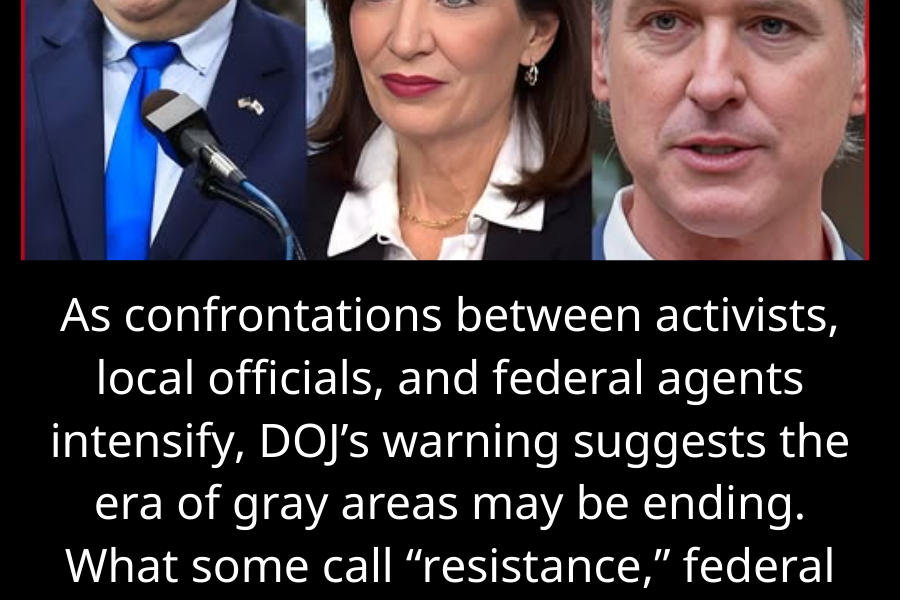
This isn’t a change in law. It’s a change in posture. It’s the DOJ shifting from defense to offense in the long-running cold war between the federal government and so-called “sanctuary” jurisdictions. The advisory is a pointed warning to activists, local officials, and anyone who might consider physically intervening in an ICE operation: the legal shields you think you have may not cover you here.
And the public reaction, captured in the comments, reveals a nation that has already internalized this conflict as a primal battle between “law” and “anarchy.”
Decoding the DOJ’s Move: The Legal Tripwire
The advisory targets a specific, high-risk scenario that has played out at protests: individuals or groups physically blocking ICE vehicles or, more extremely, attempting to make a “citizen’s arrest” of federal agents. The DOJ is now explicitly stating these acts cross a line from protected protest into federal felony territory.
Potential charges could include:
-
Obstruction of justice (18 U.S.C. § 1505)
-
Interference with a federal officer (18 U.S.C. § 111)
-
Conspiracy against rights (18 U.S.C. § 241) if the obstruction is aimed at denying someone’s due process.
The genius of the advisory is in its framing. It doesn’t attack “sanctuary city” non-cooperation policies (a complex federalism fight). It focuses on direct, physical confrontation—a much clearer-cut legal offense that is far less sympathetic to the public and easier to prosecute.
“This is a classic escalation-for-deterrence play,” says former federal prosecutor Anya Sharma. “The DOJ knows it can’t easily prosecute a mayor for non-cooperation. But it can absolutely prosecute someone who lays down in front of a van or tries to handcuff an agent. By publicly telegraphing this, they aim to chill the most disruptive tactics at the street level. It’s a warning to activists: your moral conviction may land you in a federal penitentiary, not just a county jail. They’re trying to separate the movement’s body from its most militant limbs.”
The Public Reaction: A Chorus of “Finally” and Deepening Cynicism
The sampled comments are a window into a significant portion of the electorate’s psyche:
-
The Demand for Equal Application: “’NO ONE IS ABOVE THE LAW’” (Ron Welker) and “Why not? Are they different from any other citizens?” (Abe Torres) speak to a profound frustration with perceived two-tiered justice. For these commentators, liberal activists and officials have flouted laws with impunity for years. The DOJ advisory is seen as a belated attempt to restore a fundamental balance.
-
The Cynicism of “Could”: “Key word, ‘could’….waiting to see that word change to DID” (Jacqueline Sharp Edenfield) and “They said that they could be arrested… Don’t see that happening” (Joel Russell) reflect deep distrust in the institution’s will to follow through. It’s seen as an empty threat from a department they view as politically compromised.
-
The Dehumanization of Opponents: Labeling officials “The three stooges” (Gloria Quinn) or “anarchists” (Robert Smith) strips the debate of its substantive federalism arguments. It reduces the conflict to a battle between order and chaos, patriots and saboteurs.
-
The Partisan Lens: “if Trump would’ve done anything remotely the same everybody would’ve been in a whole uproar” (George Pino) frames everything through the grievance of perceived anti-Trump bias. It’s no longer about immigration policy; it’s about which side’s actions get scrutinized.
The Larger Battlefield: Federal Power vs. Local Dissent
This DOJ advisory is one front in a multi-pronged war:
-
The Legal Front: Lawsuits over funding (like the Texas lawsuit against Biden’s ICE guidelines) and the constitutionality of sanctuary policies.
-
The Political Front: Campaigns to remove “sanctuary” mayors and DAs from office, as comments like “Removed from office you say?” (Rich Kenney) suggest.
-
The Street-Level Front: This new advisory aims to control the physical space where enforcement happens, criminalizing direct action.
The Unanswered Question: Will It Work?
The advisory’s effectiveness hinges on two things:
-
Swift, Visible Prosecutions: Without concrete cases, it’s just a paper tiger that reinforces cynicism.
-
The Activist Calculus: Will the threat of federal felony charges deter individuals who are motivated by deep moral conviction and a willingness to be martyrs for the cause? For some, a federal charge might be a badge of honor, further radicalizing the movement.
The Bottom Line
The DOJ has thrown down a legal gauntlet. It has drawn a bright red line around the physical person of federal agents, declaring them inviolable in the execution of their duties, no matter how politically contested those duties are.
The public reaction reveals a country where this issue is no longer about policy, but about tribal identity, perceived lawlessness, and a desperate craving for conclusive authority. The comments aren’t about immigration; they’re about who gets to wield power, who gets punished, and who gets to wear the orange jumpsuit in the national theater of politics.
The warning has been issued. The next physical confrontation at an ICE operation will be the test. Will it be just another protest, or will it become United States v. [Activist Name], the case that defines the new, hardened rules of engagement in America’s immigration wars?