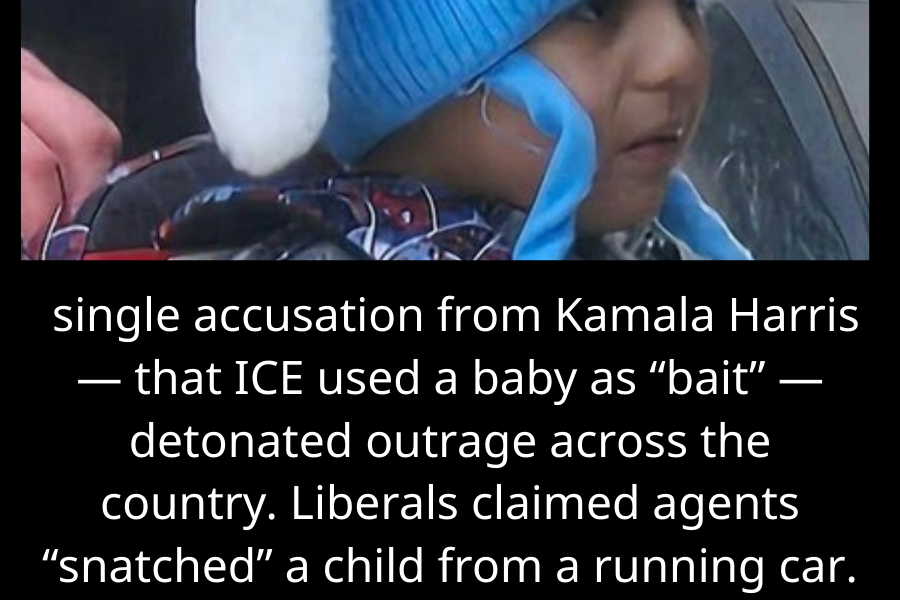
The Child at the Center: Deconstructing the ICE “Abandonment” Narrative
SAN ANTONIO, Texas — The facts are etched in the harsh, conflicting language of America’s immigration wars. On one side: an accusation of “kidnapping” and using a child as “bait.” On the other: a detailed rebuttal of “abandonment” and accusations against “agitators.” In the middle: a young child, Liam Ramos, now in a federal immigration detention center with his father.
This is not just a dispute over one operation. It is a microcosm of the entire, toxic conflict over immigration enforcement, where every action is instantly processed through diametrically opposed moral and political frameworks.
Let’s dissect the competing narratives, because the truth of what happened to Liam Ramos lies not in the shouting, but in the terrifying space between these two irreconcilable stories.
The Two Americas in the Street That Day
Narrative A: The “Kidnapping” (Harris, Activists, Lawyers)
This story portrays ICE as the aggressor and manipulator.
-
The Bait: ICE allegedly used the presence of the child to lure or pressure the father. The child’s safety was secondary to the arrest.
-
The Snatch: Agents are accused of forcibly removing a terrified child from a vehicle and family.
-
The Illegitimacy: The targets had a pending asylum case, entered legally via the CBP One app, and had no final deportation order. The operation itself was therefore an overreach.
-
The Denied Guardian: The claim that another adult begged to take the child and was refused paints ICE as indifferent to the child’s wellbeing, intent on taking him into custody.
Narrative B: The “Abandonment” (DHS/ICE)
This story paints ICE as the reluctant rescuer and rule-follower.
-
The Fleeing Father: The primary target, Adrian Conejo Arias, chose to flee on foot, leaving his child behind in an operational zone. This is the foundational fact of their defense.
-
The Refusing Mother: The “alleged mother” inside the home refused to take custody, even with assurances she wouldn’t be arrested. This, in ICE’s telling, constitutes a second abandonment.
-
The Agitators: Outside protestors, by yelling and causing chaos, further endangered and frightened the child, forcing ICE to control the scene.
-
The Compassionate Custody: Agents bought the child McDonald’s, played his music, and ultimately kept him with his father at the detention center per the father’s wishes. They frame this as going beyond protocol to preserve the family unit.
“This is the ultimate ‘he said, she said,’ but with a child’s welfare as the disputed evidence,” says Dr. Liana Cruz, a sociologist who studies state violence and narrative. “ICE’s narrative meticulously constructs a sequence of parental failure (flight, refusal) that compels state intervention. It positions the agent as the only responsible adult. The opposing narrative constructs a sequence of state aggression (the raid itself) that creates the crisis. Who is the villain and who is the rescuer depends entirely on which first cause you accept. The McDonald’s and the music are either proof of unexpected compassion or a macabre performance designed to sanitize a traumatic detention.”
The Critical, Unverified Claims
The credibility of each story hinges on unresolved points:
-
Did the mother truly refuse? ICE says she did, with assurances. The family’s attorney suggests other adults were willing but refused. This is a direct contradiction that witness testimony or bodycam footage could resolve.
-
Was there a deportation order? The family’s legal team says no, just a pending asylum case. ICE’s statement focuses on the father being a “released illegal alien.” This goes to the legitimacy of the targeted operation itself.
-
The Nature of the “Approach”: How did agents arrive? With marked cars and uniforms, or more discreetly? The perception of a “raid” versus a “targeted arrest” fuels the emotional response.
The Larger System on Trial
Beyond the specifics, this incident puts the logistics of interior enforcement on trial.
-
The CBP One App Paradox: The family used the app—the official, legal pathway promoted by the administration. Their subsequent arrest inside the U.S. sends a chilling message: using the legal process does not guarantee safety from enforcement.
-
The “Safe Person” Protocol: ICE states parents can designate a safe person for the child. Why wasn’t this immediate option exercised with the other adult present? The claim that the father wanted the child with him after his arrest changes the calculus, but highlights the impossible choices forced upon families in seconds.
-
The $2,600 and “Free Flight”: ICE’s closing statement about the app’s benefits reads as a surreal juxtaposition—a promotional plug nestled in a story about a detained toddler. It underscores the disconnect between bureaucratic policy and traumatic field reality.
The Irreducible Core
Regardless of which narrative you believe, the indisputable outcome is this: A young child who was at home is now in the Dilley Immigration Processing Center, a detention facility. His path there was paved either by the failure of his parents or by the action of the state—or, in the messy reality where both can be true, by a catastrophic collision between the two.
This case will fade, but its structure is permanent. Every enforcement operation carries the potential to create another Liam Ramos—a child who becomes a political pawn in a battle over stories, while living the very real trauma of being caught between a fleeing parent and a badge, between a protestor’s horn and the closing door of a government van.
The final question isn’t about who lied. It’s about what we accept as the cost of enforcement. Is a child in detention, even with a Happy Meal, an acceptable byproduct? The two Americas have already answered, in unison and in direct opposition: No, never. Yes, sometimes. And the chasm between those answers is where children fall.