(The sound this time is the low, resonant hum of a state testing the tensile strength of federal authority. It’s not a protest. It’s a calibrated probe. The battlefield is no longer the border; it’s a state’s sovereign prerogative to decide who enforces the law on its streets.)
The Sanctuary Gambit: When a Governor Warns the Enforcers
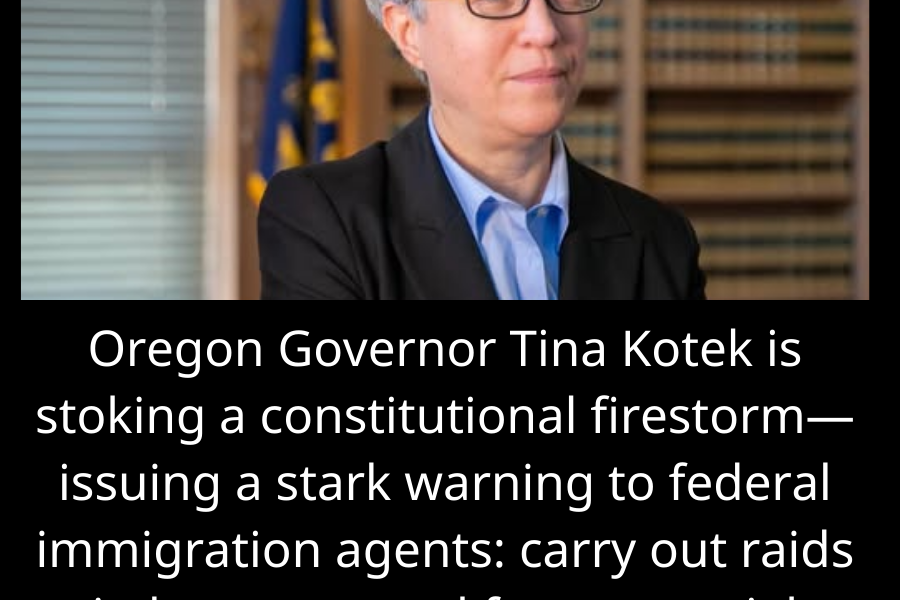
Governor Tina Kotek’s statement isn’t about immigration. Not really. It’s about jurisdiction. It’s about who gets to wield the badge, the handcuffs, and the moral authority on the ground in Oregon.
Her “doubling down” is a deliberate, escalatory move in a long-running cold war between progressive states and federal immigration policy. She’s not just declaring a sanctuary; she’s threatening to make it a trap—for ICE.
The warning that “state authorities may take action against ICE agents” is a political and legal tripwire. It changes the equation from passive non-cooperation to active, hostile deterrence.
Part I: The “Action” Gambit – Redefining ICE as the Disruptor
What does “take action” mean? It’s a beautifully ambiguous threat, a cloud of potential consequences. It could mean:
-
Criminal Investigations: For potential violations of state law during raids (e.g., trespass, unlawful detention).
-
Civil Lawsuits: Using state courts to sue ICE for overreach.
-
Professional Sanctions: For any state or local officers who provide assistance.
-
Public Doxxing & Harassment: While not official, the rhetoric energizes activists to track and protest ICE movements, creating operational paralysis.
The goal is to raise the cost and risk of every ICE operation in Oregon. It forces agents to operate not just covertly, but defensively, looking over their shoulder for state police who may view them as the lawbreakers. It inverts the power dynamic on the street.
This isn’t just “undermining federal law enforcement,” as the critique states. It’s asserting a competing sovereign claim over public safety. Kotek is saying: The primary threat to order in my state is not the presence of immigrants, but the disruptive, fear-inducing tactics of your federal agents. I will police the police.
Part II: The Legal Theater – A Calculated Constitutional Brinkmanship
This is a high-stakes game of constitutional chicken. The Supremacy Clause of the U.S. Constitution generally asserts that federal law (and its enforcement) trumps state law. But the Tenth Amendment reserves powers not delegated to the federal government to the states—including general police powers.
Kotek’s strategy lives in the murky gap between them. She is not directly attempting to arrest an ICE agent for enforcing federal immigration law (a clear Supremacy Clause violation). Instead, she is threatening to use her state’s police power to investigate the manner in which they enforce it—alleged trespass, excessive force, violations of state procedural laws.
It’s a legal judo move: using the state’s inherent authority to protect its residents’ welfare as a lever to impede a specific federal function. The courts would have to untangle whether this is a legitimate exercise of police power or a disguised, impermissible interference with federal authority.
Her rhetoric is the opening argument in that future courtroom drama, delivered on the evening news.
Part III: The Political Signal – “Complicating” as a Strategic Goal
The critique that this “threatens to further complicate efforts to enforce immigration laws” is accurate, but from Kotek’s perspective, that’s not a bug—it’s the central feature.
“Complication” is the weapon. In bureaucracy, complication equals friction. Friction equals delay. Delay equals saved futures. By entangling ICE in legal threats, procedural hurdles, and public relations nightmares, she aims to slow their operations to a glacial pace, making Oregon functionally off-limits.
This is a scorched-earth policy for the administrative state. It says: If you pursue what we see as immoral enforcement, we will leverage every tool of our state government to make your job logistically and legally unbearable.
It also sends a potent signal to two audiences:
-
To Immigrant Communities: You are under our protection. The state will be your shield.
-
To the Democratic Base: We are not just resisting; we are on the offensive. We will use power to protect the vulnerable.
The Verdict: Sovereign vs. Sovereign
Governor Kotek is not managing a conflict. She is instigating a showdown. She is testing how far a state can go in nullifying, in practice, a federal policy it deems unjust.
This moves the sanctuary state concept from a defensive posture (we won’t help you) to an offensive posture (we may actively hinder you). It transforms state troopers from potential bystanders into potential interveners.
The underlying question is revolutionary: In a federation, does a state have the duty—or the right—to use its law enforcement powers to check what it perceives as federal lawlessness?
Kotek’s warning is more than rhetoric. It’s a boundary marker. She is drawing a line around Oregon and telling federal agents that crossing it to do their jobs might mean crossing into legal jeopardy. She is making the state itself a defendant’s sanctuary.
The border isn’t just at the Rio Grande. It’s being redrawn, with legal briefs and press releases, at the Oregon state line. 🛡️⚖️