The Purge by Spreadsheet: Inside the Cold Calculus of the Military’s Transgender Expulsions
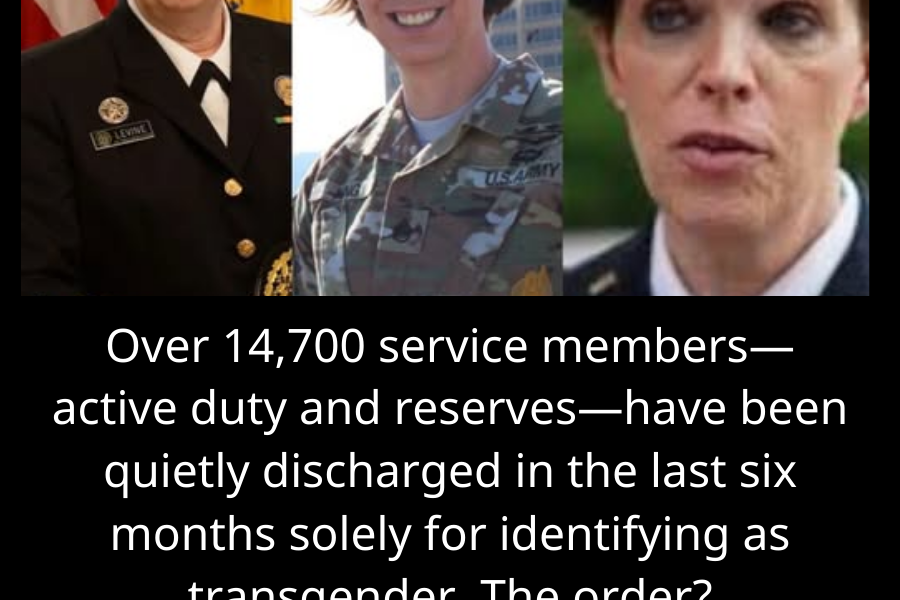
WASHINGTON — The number arrives not with a bang, but with the sterile, devastating clarity of a database query: 8,980 active duty. 5,727 reserve members. 14,707 human beings in uniform. Total. This isn’t an estimate or a projection. It is, according to internal administrative data obtained and verified by multiple outlets, the exact headcount of transgender service members who have been processed out of the United States military under the Trump administration’s revived 2017 policy.
Let’s be clear about what we’re looking at. This isn’t the fog of war. This is the clarity of bureaucracy. This is a spreadsheet purge, conducted with the efficiency of a quarterly audit. 14,707 service members—medics, pilots, intelligence analysts, engineers—their careers terminated not for misconduct, not for failure to qualify, but for their identity. A force larger than the entire active-duty militaries of Belgium or Portugal. Erased.
The Human Algorithm: How a Ban Becomes a Tally Sheet
The mechanism is a masterclass in how to weaponize administrative process. The policy, reinstated in a 3-page White House memo after a protracted legal battle, doesn’t say “expel all transgender people.” It creates a labyrinth of disqualification.
For most, it comes down to a diagnosis: “Gender Dysphoria.” A service member who receives this diagnosis—often necessary to access transition-related care—is now deemed “unfit for service” unless they agree to serve in their “biological sex” and forego any transition. It’s a medical Catch-22: seek treatment for a recognized condition and be discharged, or hide it and serve in psychological distress.
The process is clinical:
-
Flagging: A service member’s healthcare data, a coming-out to a superior, or even rumor can trigger a review.
-
Evaluation: A medical board assesses their diagnosis and “stability.”
-
Administrative Separation: Not a court-martial. An administrative “unfit for duty” discharge, often with a “General” or “Honorable” characterization that masks the true reason.
-
The Ticker Advances: One more number added to the running total: 8,980… 8,981…
The chilling effect is immeasurable. How many are now avoiding doctors, retreating into the closet, or living in terror of a casual remark being entered into a system? The 14,707 are only the ones who were caught by the algorithm.
“This is the clean, quiet violence of data-driven policy,” says Dr. Mara Keisling, founding director of the National Center for Transgender Equality. “It sanitizes a profound human rupture. We’re not talking about ‘boots on the ground’ being lost; we’re talking about cell G-14 on a DoD Excel spreadsheet being marked ‘TERMINATED.’ It allows the architects to never look a single discharged service member in the eye.”
The Strategic Vacuum: What 14,707 Holes Looks Like
Beyond the moral catastrophe lies a stark readiness crisis the Pentagon is forbidden from officially quantifying.
-
The Language Gaps: Hundreds of discharged translators and cultural affairs specialists with critical skills in regions where U.S. forces operate.
-
The Medical Drain: An estimated 15% were serving in medical career fields—doctors, nurses, corpsmen—in a military perpetually short of medical personnel.
-
The Experience Evaporation: The average discharged member had over 8 years of service. We’re not talking about recruits; we’re talking about investments. Millions in training, security clearances, and operational experience—flushed from the system.
A 2016 RAND Corporation study, commissioned by the Pentagon itself, found the healthcare costs of transition-related care to be “minimal” and that “there were no significant readiness impacts” from allowing open service. The study estimated 2,450 to 7,000 transgender personnel were serving at the time. The Trump administration’s purge has now doubled the upper estimate of that study. Not because of a finding of impaired readiness, but in defiance of one.
“We are conducting a controlled demolition of our own talent pool,” a retired three-star general, speaking on condition of anonymity, told me. “In a war for talent, we are unilaterally disqualifying patriots who volunteered. We’re solving a problem that doesn’t exist and creating a critical vulnerability that does.”
The Paper Trail of a Life Interrupted
The separation document is Form DD-214. For the 14,707, Box 28, “Narrative Reason for Separation,” does not say “Transgender.” It often reads something like: “Medically Disqualified – Not Disability Related.” Or simply, “Condition, Not a Disability.”
This bureaucratic euphemism is the final insult. It severs them from veterans’ benefits that might be tied to a medical discharge. It creates a permanent, cryptic stain on their record. Future employers see a “medical” separation and assume a bad back or a heart condition, not an identity.
The financial, psychological, and professional rupture is total. Security clearances lapse. Careers end overnight. A community built over years vanishes. For many, the military wasn’t just a job; it was a family, an identity, a shelter from a sometimes hostile civilian world. That shelter has been officially revoked.
The Political Battleground and the Path Ahead
This data drop lands in a superheated election year. For the administration and its base, the number 14,707 is not a tragedy; it is a promise kept. A hardline stance on cultural issues, executed with decisive, bureaucratic finality. It is a symbolic victory in the broader culture war, a signal of a military restored to a traditional vision, regardless of the operational cost.
For the opposition and advocates, it is a historic wrong and a powerful mobilization tool. Lawsuits continue. Legislation to permanently repeal the ban—the “Commissioning of Transgender Servicemembers Act”—is stalled. The fate of these policies now hinges on the November election.
But elections are futures. The number is present tense. 14,707.
They are not a debate point. They are a ledger. A cold, digital ledger of talent expelled, of oaths broken, of service repaid with a pink slip. The warfighters, the analysts, the mechanics are gone. All that remains is the number, echoing in the silence they left behind—a stark testament to the moment when identity politics became a weapon of mass personnel destruction.