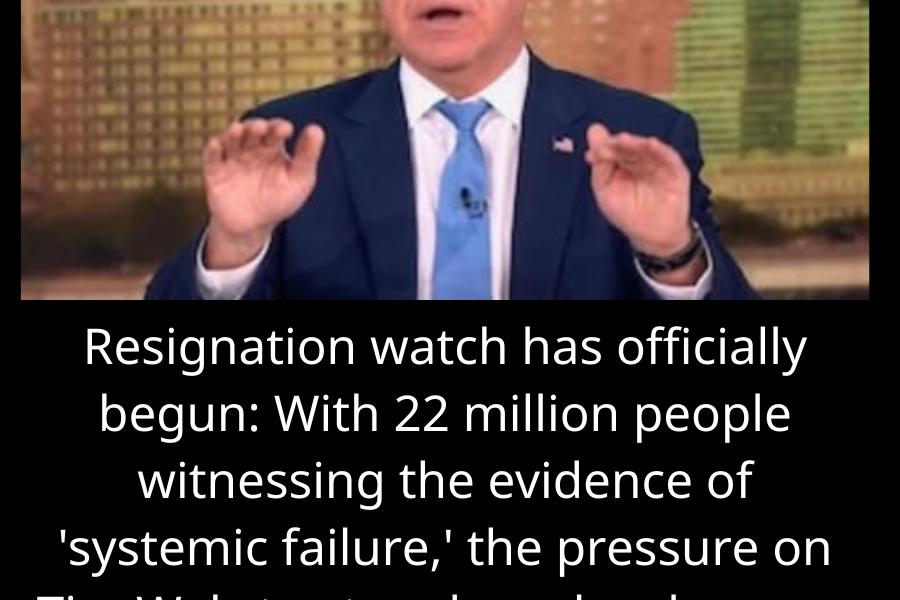
(The political scaffolding just collapsed. Not with a whisper, but with the deafening roar of 22 million digital witnesses.)
The Whistleblower Tsunami: How a Single Post Detonated a Political Career
Let’s not mince words. In the age of algorithmic firestorms, a political “scandal” is a Tuesday. But a “cascade of systemic failures” detailed by the very people who ran the system? That’s not a scandal. That’s a controlled demolition. And the target is Minnesota Governor Tim Walz.
A whistleblower post—not from opposition researchers, but allegedly from within his own administration—has gone supernova. 22 million views and climbing isn’t just viral; it’s a cultural referendum. It’s the sound of public trust hitting terminal velocity. The accusations aren’t mere missteps; they’re the architectural blueprint of a corrupted institution: retaliation, threats, buried fraud, cronyism, and a media shield.
This isn’t an attack from the outside. It’s a mutiny from within. And it changes everything.
1. The Anatomy of a “Cascade”: When Competence Collapses
The whistleblower’s core thesis is devastating in its simplicity: this isn’t one mistake. It’s a self-reinforcing ecosystem of failure, engineered and maintained at the top.
Let’s break down the lethal cocktail:
- “Retaliating against whistleblowers / Threatening families”: This is the kill switch on accountability. It’s not just about punishing truth-tellers; it’s about installing a climate of fear so deep that the next person with evidence never comes forward. It’s how rot becomes endemic.
- “Burying fraud reports / Letting agencies ignore auditors”: This is the operational manual. It’s the active choice to not just ignore red flags, but to bury them. It transforms government agencies from watchdogs into accomplices. Auditors aren’t guides; they’re annoyances to be circumvented.
- “Installing unqualified friends into top jobs”: This is the patronage engine. It replaces meritocracy with loyalty, ensuring that the people in charge are there to protect the boss, not the public. Competence becomes secondary to complicity.
- “Leaning on media allies to hide the mess”: This is the final, cynical layer—the perception management. It assumes the public can be manipulated, that truth is just another narrative to be managed by friendly outlets.
Together, it paints a picture not of a governor who lost control, but of one who designed a system where accountability was impossible by design.
2. The 22 Million-View Jury: Trial by Digital Mob
The staggering reach—22 million views—transcends politics. It enters the realm of collective cultural judgment. This isn’t a partisan Fox News segment or a liberal MSNBC deep dive. This is raw, unfiltered testimony on the internet’s public square, and the verdict is being rendered in real-time by an audience orders of magnitude larger than the entire population of Minnesota.
The platform doesn’t matter. The scale does. That number represents a critical mass of attention that becomes its own gravity well, pulling in media coverage, opposition research, and the horrified gaze of every voter who ever wondered, “What are they hiding?”
In this environment, traditional political defenses (“out of context,” “partisan hit job”) evaporate. The sheer weight of public attention crushes nuance. The quote, “This is a cascade of systemic failures leading up to Tim Walz… created and maintained by Tim Walz,” becomes the tagline for his governorship. It’s the digital epitaph.
3. The Endgame: “Resign” vs. “Reelection”
The final demand in the post—“He needs to RESIGN”—is the logical conclusion. The argument is that an election is too slow, too gentle a remedy for a breach of trust this fundamental. A resignation is the only proportional response to a total systemic collapse; it’s the political equivalent of a controlled demolition to prevent wider civic catastrophe.
The core question shifts from “Can he win?” to “Does he have any moral authority to govern for another day?” When your own employees become your chief accusers, the very machinery of state you’re supposed to lead is testifying against you. How do you administer a government whose operators believe you have corrupted its purpose?
This frames the coming days not as a campaign, but as a political survival thriller. Every hour Walz remains, he is betting that this tsunami will recede, that the institutions he’s accused of corrupting will hold, and that the 22 million viewers will get distracted.
The Verdict: A Governorship in Freefall
Tim Walz is no longer fighting an opponent. He’s fighting a narrative of total, systemic failure, delivered by the most credible sources imaginable: the people who worked for him.
This is beyond policy disagreement. This is an indictment of basic managerial competence and public integrity. The whistleblowers aren’t arguing he’s too liberal or too conservative. They’re arguing he made government unworkable, unaccountable, and hostile to the truth.
Minnesota’s political landscape isn’t experiencing a storm. It’s experiencing a fault line rupture. The ground beneath the governor’s office has opened up.
The post calls it a “circus.” That’s too kind. A circus is organized chaos. This is just chaos. And the ringmaster has lost control of the animals.
The final act of this administration may no longer be governed by votes, but by the unyielding pressure of a verdict already delivered by 22 million people. 🎪💥