The Prescription for Prime Time: Should America Ban Pharma Ads?
WASHINGTON — Picture this: You’re watching the evening news. A montage of blissful, sun-drenched people appears, laughing, hiking, embracing. A soothing, authoritative voiceover begins: “Do you feel sadness? Fatigue? A lack of joy? Ask your doctor about Sunluma.” Cut to a rapid-fire recitation of side effects: “May cause dizziness, nausea, sudden blindness, or death. Do not take if you are alive or plan to be.”
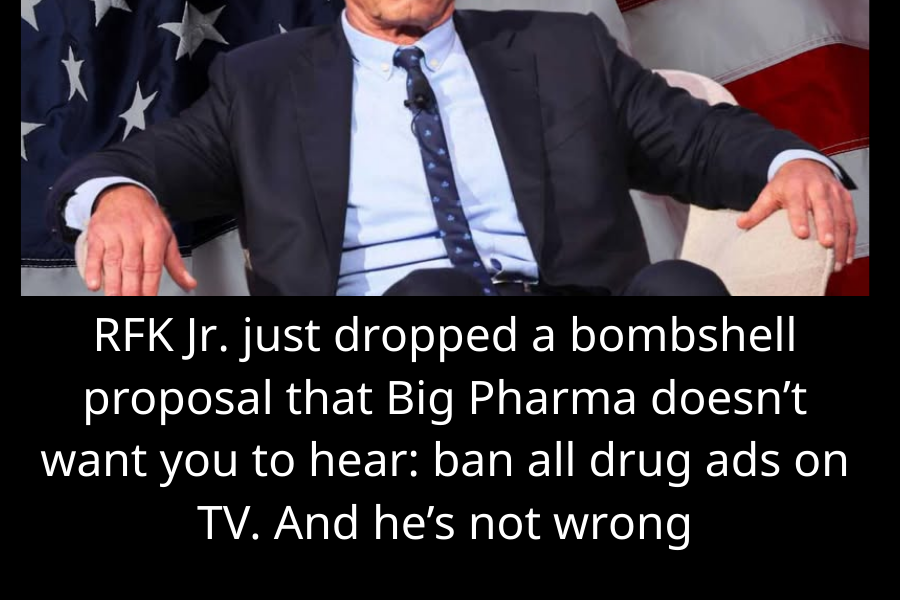
This surreal ritual is as American as apple pie and for-profit healthcare. The United States and New Zealand are the only two developed countries on Earth that permit direct-to-consumer (DTC) advertising of prescription pharmaceuticals. Robert F. Kennedy Jr.’s call to ban these ads isn’t a fringe idea; it’s a direct challenge to a multi-billion-dollar pillar of the medical-industrial complex.
The question isn’t just about ads. It’s about: Who drives American healthcare—trained physicians or marketing algorithms?
The Case for the Ban: Diagnosis by Commercial
Kennedy’s argument, echoed by a broad coalition of physicians, ethicists, and health policy experts, rests on a few powerful premises:
-
The Doctor-Patient Relationship on Life Support: The core of medical ethics is that a licensed professional, after a thorough evaluation, diagnoses and prescribes in the patient’s best interest. DTC ads invert this relationship. They turn patients into advocates for specific, branded drugs, pressuring doctors for a prescription. This turns a consultation into a negotiation. “Patients come in with a self-diagnosis and a demanded cure from a 60-second spot,” says Dr. Kavita Patel, a primary care physician. “It erodes trust and medical authority.”
-
The Disease-Mongering Engine: Ads don’t just sell pills; they sell the need for pills. They medicalize normal human experiences—sadness, shyness, age-related joint stiffness—into conditions requiring pharmaceutical intervention. This drives overdiagnosis and overtreatment, fueling America’s pill-centric culture.
-
Skyrocketing Costs for Everyone: Pharma companies spend roughly $6 billion annually on DTC ads. That money isn’t charity; it’s baked into the price of drugs. Americans pay the highest drug costs in the world, subsidizing this marketing blitz. Banning ads wouldn’t lower prices overnight, but it would remove a major, non-medical cost driver.
-
The “Ask Your Doctor” Dodge: The famous phrase is a legal and rhetorical masterpiece. It appears to defer to medical authority while psychologically transferring agency to the patient. It turns the doctor from a prescriber into a gatekeeper to be overcome. As health policy expert Dr. Jerry Avorn puts it: “It’s the equivalent of a stranger handing you a note to give your spouse that says, ‘Ask your husband for a new sports car.’ It pollutes the private space of the exam room with a sales pitch.”
“The United States is conducting a massive, uncontrolled experiment in populist medicine,” says Dr. Aaron Kesselheim, a professor of medicine at Harvard Medical School. “We are allowing corporations with a fiduciary duty to shareholders to shape public understanding of disease and treatment. No other country considers this an acceptable way to practice public health. The data shows these ads increase prescribing rates for expensive, newer drugs, even when older, generic, and often equally effective alternatives exist.”
The Case Against the Ban: “Informed” Consumers and Market Forces
The pharmaceutical industry and advertising groups counter with a defense rooted in American values of choice and information:
-
The “Empowered Patient”: They argue ads educate consumers about under-diagnosed conditions (like diabetes, HIV, or psoriasis) and destigmatize disease. A patient seeing an ad for a psoriasis drug might finally seek help for a condition they’d hidden in shame. Ads, they say, promote public health awareness.
-
First Amendment Protections: The central legal argument is that DTC advertising is commercial speech, protected by the First Amendment. Any blanket ban would face immediate, severe constitutional challenge. The industry argues for more disclosure, not less speech.
-
Driving Innovation and Competition: The massive revenue from blockbuster drugs (often driven by DTC campaigns) funds research and development for future treatments, the industry claims. Furthermore, ads for new drugs can pressure competitors to lower prices or innovate.
The Global Laboratory: A Natural Experiment
Look at the rest of the developed world. In the European Union, Canada, Australia, and Japan, doctors diagnose, and pharma marketing is directed almost exclusively at medical professionals. There is no evidence that patients in these countries are less informed about major diseases or have worse health outcomes. In fact, they enjoy far lower drug prices and avoid the cultural phenomenon of “lifestyle drug” marketing.
The system works without priming consumers to ask for Ozempic by name during their physical.
The Verdict: A Symptom of a Deeper Disease
RFK Jr.’s proposal hits a nerve because it addresses a symptom of a dysfunctional system. The ads are a garish manifestation of a healthcare model where treatment is a revenue stream, patients are consumers, and the line between education and manipulation is deliberately blurred.
Would a ban be a good idea? From a public health and ethical standpoint, the evidence strongly suggests yes. It would recenter the doctor-patient relationship, reduce coercive marketing pressures, and likely curb some of the excesses of over-prescription and cost inflation.
But in America, the question is never purely about health. It’s about money, speech, and power. The pharmaceutical and advertising industries wield immense lobbying power. The First Amendment argument is a formidable shield.
The debate over banning pharma ads is, ultimately, a proxy war. It’s a fight over whether healthcare is a market commodity or a public good. The fact that the ad breaks are filled with pitches for the latest weight-loss drug or antidepressant while news segments discuss medical bankruptcies tells you everything you need to know about which model is currently winning.
Kennedy’s call won’t result in a ban soon. But it forces a stark, uncomfortable comparison: Why does the world’s most advanced medical system rely on a marketing tactic that the rest of the civilized world considers medically unethical and morally suspect?
The answer to that question is far more revealing than any side effect disclaimer at the end of a commercial.