(The temperature in the room drops from the heat of rhetoric to the cold, metallic taste of real fear. The battlefield is no longer the Senate floor or the social media feed. It’s a staffer’s inbox. A home address. A family’s peace of mind.)
From Dogpile to Death Threat: The Chilling Calculus of Modern Political Warfare
They always said politics was a contact sport. They never said it was a blood sport.
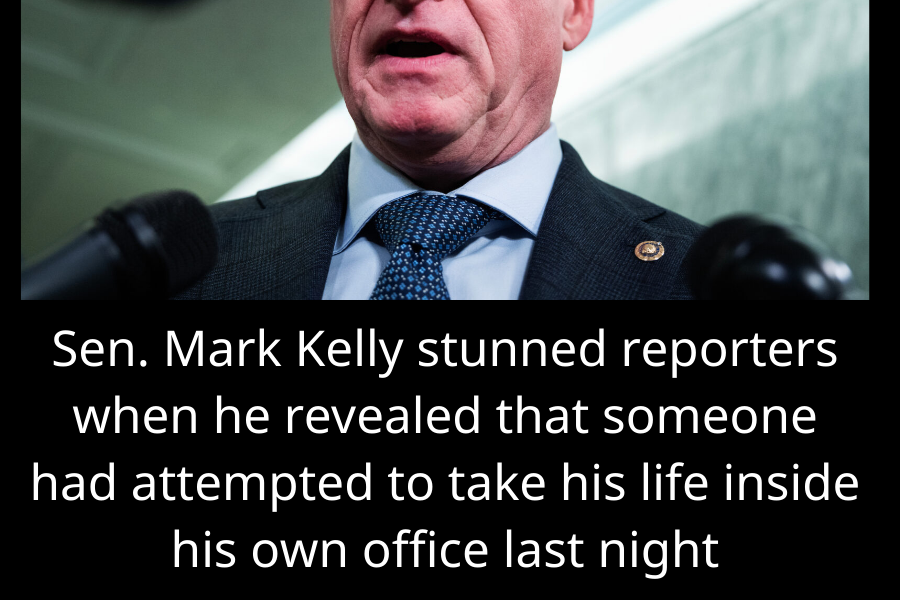
Senator Mark Kelly’s revelation isn’t a political point. It’s a distress signal from inside the machine. The “graphic” and “violent” threats landing in his office are the logical, venomous endpoint of the narrative we just witnessed being constructed around him.
This is where the political “othering” completes its circuit. He wasn’t just called compromised. He was marked. And for a certain faction, buoyed by the language of betrayal and ownership, a mark is an invitation.
Let’s trace the wire from the rhetoric to the threat.
Phase 1: The Dehumanizing Frame – “He is not one of us.”
Recall the language: “owned,” “sold out,” “serving the Soros agenda,” “we are done pretending he is one of us.”
This isn’t criticism. It’s excommunication. It strips a person of their shared identity, their honorable past (astronaut, captain), and recasts them as a traitorous agent of a foreign power. This is a crucial psychological precondition for violence. You don’t threaten a fellow citizen you disagree with. You neutralize a hostile entity that has infiltrated your tribe.
The “Soros” linkage is the accelerant. It plugs Kelly into a pre-existing, fever-dream conspiracy grid where globalist puppeteers pull the strings of a corrupt world. He’s not just a Democrat; he’s a manifestation of the evil they believe is consuming the country. This raises the stakes from policy dispute to existential struggle.
Phase 2: The “Illegal Orders” Trigger – Framing Dissent as Sedition
Kelly’s original sin, in this narrative, was telling service members to use their judgment against “illegal orders.” From a constitutional perspective, this is a bedrock principle of military ethics. From within the constructed frame of absolute loyalty to a single leader, it is the ultimate heresy. It’s not advice; it’s “encouraging mutiny.”
When President Trump then publicly criticizes Kelly for this, it’s not just a rebuttal. It’s a signal. It’s the most powerful voice in that ecosystem affirming the frame: This man is undermining your Commander. He is a danger to order.
For those already steeped in the “us vs. them” mentality, the signal is received. The leader has identified a threat. The community’s job is to respond.
Phase 3: The Digital to Physical Pipeline – “Graphic and Violent Threats”
This is where the abstract becomes horrifically concrete. The online rhetoric—the comments sections, the encrypted channels, the social media posts calling him a traitor, a sellout, a Soros puppet—breeds a subset that feels empowered to enact the logical conclusion.
The threat isn’t just “I disagree with you.” It’s the detailed, visual, panic-inducing promise of harm. It’s sent to his office—the symbolic seat of his power—to shatter the safety of his staff, to remind him that the wall between political theatre and physical consequence has been demolished.
These threats are a form of terrorism, lowercase ‘t’. Their goal is not necessarily to be carried out (though the risk is ever-present), but to instill fear, to silence, and to exact a cost. The message is: Step out of line. Challenge the narrative. And we will bring the war to your doorstep.
It’s the intended effect of the dehumanization campaign: to make the target feel isolated, vulnerable, and too afraid to speak.
The Chilling Equation: Rhetoric as a Loaded Weapon
What we are witnessing is a predictable chain reaction:
-
Demonize the individual (He’s not one of us, he’s owned).
-
Criminalize their dissent (He’s encouraging mutiny, betraying the country).
-
Signal from leadership that they are a legitimate target.
-
Unleash the digital hounds with implicit permission.
-
Receive the violent threats as the inevitable downstream effect.
Senator Kelly isn’t the first. He won’t be the last. This is the new cost of doing business in American politics for anyone who stands as a prominent critic within this specific, charged ecosystem. The threats are the symptom. The disease is the rhetoric that treats political opponents not as fellow Americans in disagreement, but as existential enemies deserving of eradication.
The real story isn’t that Kelly is getting threats. It’s that a predictable, well-oiled machine exists to generate them. The speech that calls him a traitor and the email that threatens his life are not disconnected. They are two points on the same line.
The question for the body politic is no longer about who said what about military orders. It’s a darker, more fundamental one:
When we choose our words, do we understand we are also, potentially, choosing our weapons?
The graphic threats in Mark Kelly’s inbox are not an aberration. They are a feedback loop closing. And the silence that often follows from others in the face of such rhetoric isn’t neutrality. It’s complicity in the circuit.
The vote was on policy. The verdict is now being delivered in terror. ☎️⚖️🔪