(Cue the split-screen in the American mind. One channel plays the anthem of the protected citizen. The other runs the footage of the accused collective. The volume on both is maxed out.)
The Shield and the Spotlight: The Dueling Politics of Protection and Indictment
Two sentences. Two Americas. Two irreconcilable realities sharing the same oxygen.
“I call what President Trump is doing is looking out for American citizens.”
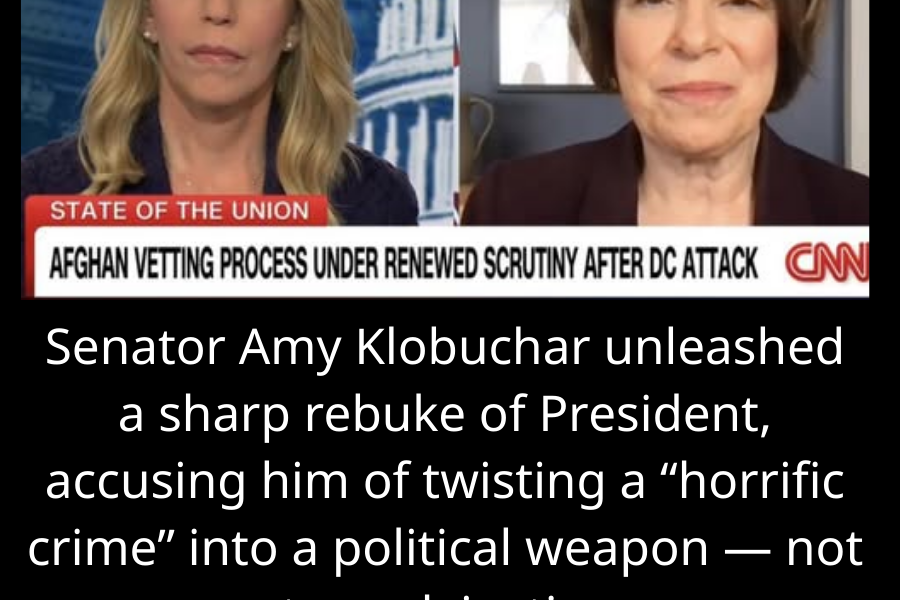
“WHAT THE PRESIDENT HAS DONE IS TAKEN A HORRIFIC CRIME THAT OCCURRED IN DC AND INDICTED AN ENTIRE GROUP… THIS IS WHAT HE DOES. HE TRIES TO MAKE PEOPLE HATE EACH OTHER.”
One is a statement of faith. The other, a charge of arson. They are not disagreeing about a policy detail. They are describing two different presidents, operating in two different moral universes. Let’s map the chasm.
Part 1: The Logic of “Looking Out” – The Politics of the Designated Citizen
To say Trump is “looking out for American citizens” is to subscribe to a specific, powerful political narrative. In this story:
- “American citizens” are a distinct, bounded class in need of defense. The “looking out” implies a hostile world: illegal immigrants flooding borders, foreign countries stealing jobs, domestic elites selling out the nation, criminals preying on communities.
- The President acts as the nation’s chief protector and avenger. His policies—travel bans, tariffs, immigration raids, tough-on-crime rhetoric—are not acts of aggression but of rightful defense. He is the human embodiment of the “America First” shield.
- Any collateral damage—a migrant family separated, a foreign ally alienated, a minority community profiled—is framed not as cruelty, but as the necessary, tough-minded cost of protection. You cannot defend a fortress without deciding who stays outside the walls.
In this view, Senator Klobuchar’s outrage is not a valid critique; it is the predictable whine of those who prioritize the “other” over the citizen. It’s evidence that the protector is doing his job, because the people who dislike walls are always the ones who never had to build them.
Part 2: The Logic of “Indicting a Group” – The Politics of Collective Stigma
Now, step into Senator Klobuchar’s frame. Her accusation is precise and devastating: “He has taken a horrific crime… and indicted an entire group.”
This is the anatomy of political scapegoating.
- A Specific, Atrocious Act: A violent crime occurs, often with a suspect from a marginalized group (e.g., an immigrant, a member of a minority).
- The Rhetorical Transfer: The President’s language doesn’t just condemn the act. It severs the individual from the crime and grafts the crime onto the identity group. The suspect isn’t a “murderer who is an immigrant”; the story becomes “immigrant murder.” The act ceases to be an individual tragedy and becomes a symbolic property of the entire demographic.
- The Policy Justification: This newly “indicted” group—now collectively stained with the horror of the crime—becomes the justification for sweeping, punitive measures. Travel bans. “Shithole country” rhetoric. Mass deportations. It creates a moral emergency that demands radical action against the tainted group.
Klobuchar is arguing that this is not governance. It is social arson. It is taking the raw, human material of tragedy and forging it into a weapon of mass division. The goal is not safety, but solidarity through shared resentment. It unites “true Americans” not by what they love, but by whom they are told to fear.
Part 3: The Unbridgeable Gap – “Looking Out” vs. “Sowing Hate”
Here is the core of the American schism. These two statements are talking past each other from opposite sides of a moral event horizon.
- For the supporter, Trump’s rhetoric about groups following a crime is tough truth-telling. It’s “looking out” by warning about a dangerous element. Connecting crime to immigration isn’t bigotry; it’s statistical realism and protective instinct.
- For the critic, that same rhetoric is the definition of sowing hate. It is the deliberate, cynical conflation of individual guilt with collective identity to fuel fear and justify policies that would otherwise be seen as cruel or unconstitutional.
One side sees a defender naming threats.
The other sees a demagogue manufacturing them.
The supporter asks: “Why do you care more about not offending a group than about protecting citizens?”
The critic asks: “Why do you believe protecting citizens requires you to falsely indict millions of innocent people?”
There is no compromise here. There is only competition between two visions of leadership:
- The Protector-Warrior: Who draws bright lines between “us” and “them,” defends the “us” aggressively, and views compassion for “them” as a strategic weakness.
- The Pluralist-Unifier: Who seeks justice for specific crimes through specific laws, resists collective blame, and views social cohesion itself as a national security interest that is shattered by rhetoric of group indictment.
The Verdict: Which Fire Are We Feeding?
The debate about Trump is never just about Trump. It is a referendum on a primal question: What is the source of our safety?
Is safety achieved by identifying and excluding the dangerous “other,” even at the cost of collective stigma and social division?
Or is safety found in strengthening the bonds of a just, inclusive community, where the rule of law applies to individuals, not demographics, and where social trust is the ultimate bulwark against chaos?
Senator Klobuchar and the anonymous citizen aren’t arguing over a fact. They are describing two different fires. One believes the President is stoking a protective fire in the hearth to keep the nation warm. The other believes he is lighting a wildfire of hatred that will consume the very house it’s meant to protect.
The only thing they agree on is that the country is burning. They just disagree on who lit the match, and who’s holding the hose. 🔥 🇺🇸