(The political theater just hit a raw nerve—your wallet. And the stage is the open enrollment portal where millions are about to get a very unpleasant surprise.)
The Premium Shock: How a D.C. Standoff is About to Hit Your Bank Account
Let’s cut through the political static and talk about the email you’re probably about to get from your health insurer. The one that starts with, “Important Update About Your Plan.” The one that, for tens of millions of Americans, translates to one gut-punching phrase: Your health care is about to get more expensive.
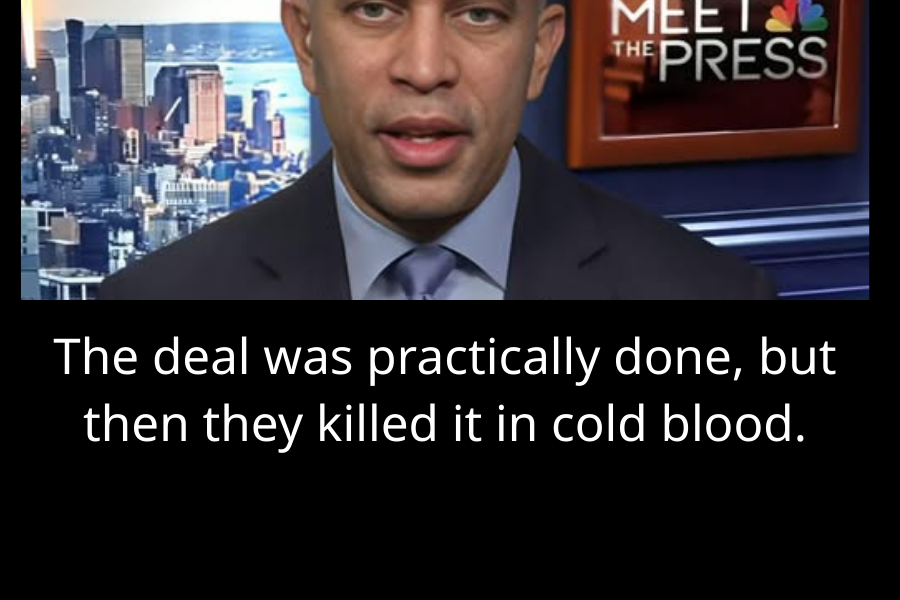
We’re in the open enrollment period—the few weeks you have to lock in your health plan for next year. And according to House Minority Leader Hakeem Jeffries, a financial storm is brewing, set to hit in January. The reason? A Washington game of chicken over the Affordable Care Act’s (ACA) premium tax credits, and it’s a game where you, the taxpayer and patient, are the collateral damage.
1. The “Kitchen Table” Math: What’s Actually at Stake
First, a quick decode. These aren’t some abstract government funds. The expanded ACA tax credits, passed during the pandemic, are what kept Obamacare plans actually affordable for middle-class families. They’re the reason a 45-year-old freelancer didn’t see her $700/month premium. They’re the subsidy that made the difference between a manageable $50 copay and a budget-busting $150.
Let’s be crystal clear: if these credits expire or are scaled back as Jeffries warns, we’re not talking about a slight adjustment. We’re talking about “dramatically increased premiums, co-pays and deductibles.” This is the kind of economic shock that forces real-world, painful choices:
- Do we drop our family’s health insurance and risk it?
- Which bill do we not pay this month to cover the new premium?
- Do I skip that specialist visit because the new deductible is insurmountable?
This isn’t a policy debate. It’s a household budget crisis, manufactured in D.C.
2. The Blame Game Algorithm: “Republican Extremists” or Fiscal Prudence?
Jeffries doesn’t mince words. The villain in his story is clear: “House Republicans, led by Speaker Johnson,” who he claims have “zero interest in keeping health care affordable.” The framing is potent—“Republican extremists… playing games with the health care of the American people.”
This is a deliberate narrative. It’s not a disagreement over fiscal policy; it’s a moral failure. By using the word “extremists,” Jeffries is trying to paint the opposition as outside the bounds of reasonable governance, as actors who would willingly harm their own constituents for a political win.
But let’s flip the script to the GOP perspective, which Jeffries naturally omits. From their vantage point, the expanded credits were a temporary, emergency pandemic measure. Extending them indefinitely, without corresponding spending cuts, is fiscally irresponsible and balloons the national debt. Their argument is that the ACA itself is the problem, and propping it up with massive, permanent subsidies is throwing good money after bad. For them, this is about forcing a reckoning on the true cost of the law.
So, who’s right? Is it a heartless game or a necessary fiscal stand? The answer depends entirely on whether you’re looking at a balance sheet in Washington or a family budget in Ohio.
3. The Human Cost of a Political Deadline
The most brutal part of this entire situation is the timing. The open enrollment period is now. People are making decisions today that will impact their financial and physical well-being for all of 2025.
By allowing this uncertainty to hang over the process, Congress is forcing Americans to sign a contract without knowing the final price. It’s the ultimate bait-and-switch: you pick a plan based on today’s subsidies, only to get a bill in January that’s hundreds of dollars more.
This creates a cascade of instability. It erodes trust not just in politicians, but in the health insurance system itself. It tells people that their access to care is a bargaining chip, a line item to be negotiated by people who enjoy gold-plated, government-sponsored health plans themselves.
The Verdict: Your Health, Their Pawn
Hakeem Jeffries’ speech isn’t just a partisan broadside. It’s a flare, signaling an imminent, tangible crisis for millions. This debate exposes the ugly underbelly of modern governance: the willingness to use human well-being as leverage.
The question isn’t just about the future of the ACA. It’s about what we value. Is a temporary win on a fiscal principle worth the real-world panic of families staring at unaffordable medical bills?
They’re debating abstractions in D.C.—“debt,” “subsidies,” “political wins.” But out here, in the real world, it’s much simpler. It’s about whether getting sick will also mean going broke.
The clock is ticking on open enrollment. And for once, the pre-existing condition threatening the system isn’t a medical one—it’s political. 🩺💸