(The sound is not a gavel’s crack, but the heavy, final thud of a legal door closing. This isn’t a policy shift; it’s the judicial sanctioning of a philosophical pivot on the very meaning of “temporary” and “protection.”)
The Clock Runs Out: How “Temporary Protected Status” Lost Its “Protected”
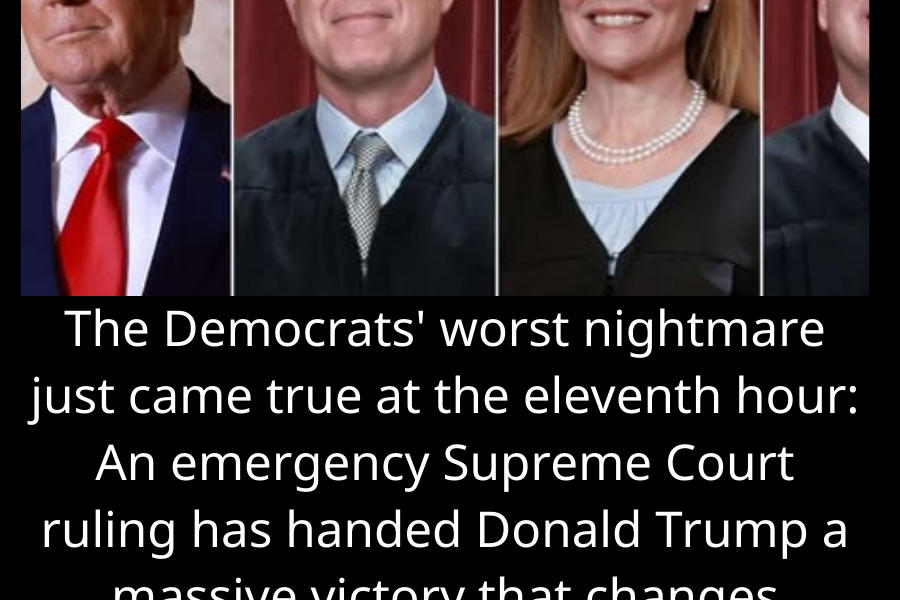
The Supreme Court’s emergency order is a tectonic event. It doesn’t just affect 300,000 Venezuelans. It recalibrates the moral and legal machinery of American sanctuary. The program in question—TPS—was always a paradox: a permanent temporary status. For decades, administrations of both parties renewed designations for countries mired in perpetual crisis, creating de facto permanent residency for hundreds of thousands.
The Trump administration, and now a majority of the Supreme Court, have called that bluff. They have enforced the “temporary.”
Part I: The Philosophical Pivot – From “Protection” to “Program Integrity”
The core of Trump’s argument, now judicially enabled, is that TPS had metastasized. It was designed as an emergency tourniquet, not a permanent residency pathway. By ending it for Venezuela—a country still in profound crisis—the administration is making a brutal statement: America’s capacity for mercy is not infinite, and its patience has expired.
This reframes the debate:
-
Advocate View: TPS is a humanitarian promise to people who cannot safely return. Revoking it is a death sentence or a sentence to destitution.
-
Administration/ Court Majority View: TPS is a discretionary program that has been abused through endless extensions. Ending it is an act of bureaucratic integrity and enforcement of original intent.
The lower court’s finding that DHS acted with “unprecedented haste” and “preordained purpose” is, in this new light, framed not as illegality, but as decisive action to correct a long-standing executive overreach.
Part II: The Dissent’s Wound – “Lives Hang in the Balance”
Justice Jackson’s dissent is a moral siren. She attacks not just the outcome, but the process. The “emergency docket” (or “shadow docket”) is meant for true, irreparable emergencies. Her charge is that the Court is using this extraordinary tool for ideological governance, tipping the scales of justice while bypassing full briefing and deliberation.
Her phrase—“privileging the bald assertion of unconstrained executive power over countless families’ pleas for stability”—cuts to the heart of the conflict. It paints the majority as valuing procedural executive authority above tangible human consequence. The “stability our Government has promised them” is the crux: TPS holders built lives, had children, bought homes, paid taxes—on the basis of a renewable government promise. That promise has now been deemed revocable with “unprecedented haste.”
Part III: The Ripple Effect – A Template for Unmaking
While the order applies only to Venezuelans, its precedent is a template. The legal reasoning—that the executive has broad discretion to end TPS designations—now hangs over every TPS group: Haitians, Salvadorans, Hondurans, Syrians.
This creates a state of permanent existential precarity for over half a million people. It transforms TPS from a shield into a sword of Damocles, held by whichever administration is in power. Immigration policy becomes a pendulum that doesn’t just stop benefits, but actively unravels settled lives.
The attorney’s quote—“People don’t know whether to pack up their lives”—captures the human reality of this legal shift. This isn’t about losing a benefit; it’s about the active destruction of a life built in good faith under a government program. It is the bureaucratic equivalent of an eviction notice for an entire community.
The Verdict: The End of Humanitarian Incrementalism
This ruling represents the closing of a specific chapter in American immigration: the chapter of humanitarian incrementalism, where temporary measures quietly became permanent through inertia and compassion.
The Supreme Court has allowed a new chapter to be written: one of enforcement finality. In this chapter, “temporary” means temporary. “Discretion” means the discretion to end, not just to grant. The “protected” in Temporary Protected Status is now conditional on the political will of the executive, backed by a judiciary willing to grant that will immense deference.
The immediate consequence is potential deportation for Venezuelans to a collapsed, dangerous state.
The broader consequence is the weaponization of uncertainty. It tells every immigrant here on a temporary status that their foothold in America is just that—a foothold on a cliff face, and the government that gave it to them holds the hammer that can smash it.
The Court didn’t just rule on a status. It reset the clock on the American promise. And for 300,000 people, the time they were told they had has just, abruptly, run out. ⏳⚖️🚪