(The battlefield shifts from borders and battlefields to something more intimate: the grocery store, the farm subsidy, the school lunch tray. The weapon: data. The insinuation: conspiracy.)
The Audit of Belonging: How a “Program Review” Becomes a Political Siege Engine
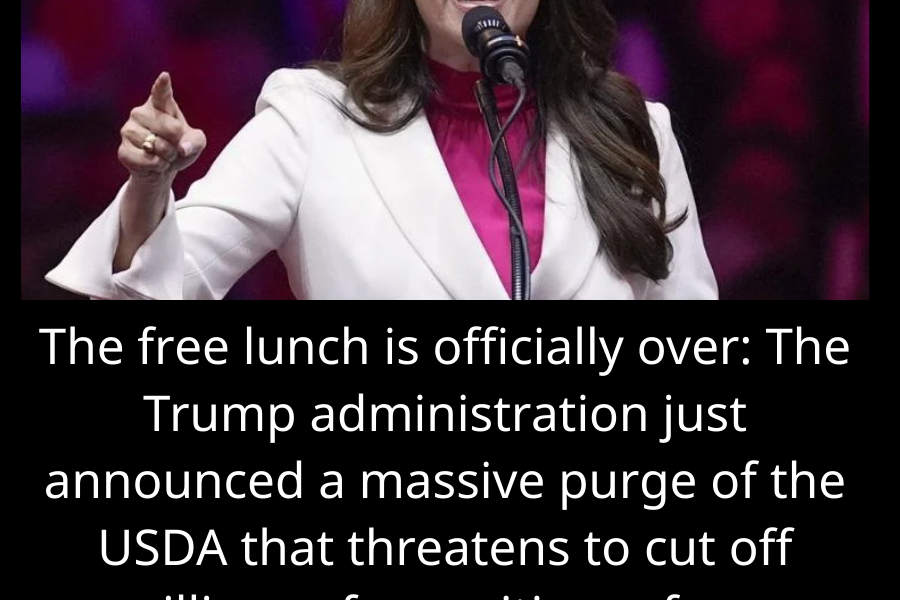
The statement from Secretary Brooke Rollins unfolds with the chilling precision of a legal discovery request. It is not an announcement of policy; it is the opening argument in a trial of the American welfare state itself.
Let’s decode the procedural language, because beneath the bureaucratic veneer—”review,” “data,” “compliance”—lies a radical political maneuver.
“At @POTUS’ direction we will be reviewing ALL @USDA PROGRAMS to ensure only legal citizens are receiving benefits.”
The opening is a classic power-signaling move. The directive comes from the top, imbuing a departmental audit with the aura of a presidential crusade. “ALL” is in caps, signaling totality, a sweeping inquisition. The goal is framed not as optimization, but as purification: ensuring only legal citizens.
This immediately establishes a premise: that the system is corrupted by the presence of the ineligible. The review is not to see if this is happening, but to root it out as an assumed fact.
Part 1: The “Notice” & The Narrative of Invasion
The Secretary grounds her action in precedent:
“Earlier this year, USDA put states on notice reminding them illegal immigrants and certain non-citizens CAN NOT receive SNAP benefits.”
This is crucial. It establishes a narrative timeline: We warned them. We laid down the law. The use of “CAN NOT” in all caps is the voice of stark, uncompromising authority. It paints any subsequent non-compliance not as a bureaucratic dispute, but as willful defiance of a clear federal order.
It also narrows the focus to SNAP (food stamps), a program deeply tied to cultural narratives about work, dependency, and who “deserves” help. This isn’t about obscure agricultural subsidies; it’s about the most visceral form of public aid: putting food on the table.
Part 2: The Data Gambit – “Turn Over Recipient Data”
Here is the operational heart of the conflict:
“Right now, we are requiring states turn over recipient data to fight waste, fraud, and abuse.”
This sounds reasonable. Who’s against fighting “waste, fraud, and abuse”? The classic, unassailable trifecta of good governance.
But the devil is in the demand. This isn’t aggregated, anonymized statistics. This is individual recipient data. The federal government is demanding that states hand over personal information on millions of low-income Americans to conduct what is, in essence, a citizenship-status dragnet.
The goal is to cross-check every name against immigration databases. It transforms the social safety net from a system of support into a surveillance apparatus for immigration enforcement. It fundamentally changes the relationship between a citizen receiving food aid and their government—from one of (theoretically) dignified support to one of suspicion and vetting.
Part 3: The Accusation – “WHAT are they hiding? WHO are they hiding?”
This is where the press release becomes a prosecutorial brief. The revelation that “22 blue states have refused to provide the data” is the catalyst for the explosive, rhetorical climax.
The questions—“WHAT are they hiding? WHO are they hiding?”—are not questions. They are indictments.
This is the masterstroke. It reframes the conflict entirely.
- The States’ Position: They likely argue this is an overreach, a violation of privacy, an improper fusion of welfare and immigration enforcement that will deter eligible citizen families (including those with mixed-immigration-status members) from seeking vital aid, for fear of deportation.
- The Rollins/Trump Frame: This resistance is not principled. It is obstructionism with malicious intent. “Blue states” are not protecting their residents; they are “hiding” illegal beneficiaries. The refusal to comply is proof positive of the corruption the audit was created to find.
It creates a perfect political feedback loop:
- Demand invasive data in the name of rooting out “illegals.”
- When states refuse on privacy/legal grounds, accuse them of complicity in fraud.
- Use that accusation to further galvanize the base, painting Democratic states as sanctuary jurisdictions not just for criminals, but for welfare cheats.
The “thank you, President Trump, for putting Americans first!” is the final seal. It defines the terms: compliance with this data demand = putting Americans first. Resistance = putting someone else first.
The Grand Strategy: The Safety Net as a Siege Perilous
Secretary Rollins’ announcement is a key move in a larger political war on two fronts:
1. The Administrative Front: It seeks to leverage federal power to reshape implementation of national programs at the state level, creating a patchwork where red states comply with the new surveillance regime and blue states become legal battlegrounds. It sows administrative chaos to demonstrate “systemic failure.”
2. The Narrative Front: It feeds the potent story that Democratic governance is inherently corrupt. It’s not just that they have different policies; they are actively “hiding” people who are stealing benefits from “real Americans.” It takes the abstract concept of “waste” and gives it a face: the “illegal immigrant” on food stamps, shielded by a “blue state” governor.
This isn’t just about SNAP or farm programs. It’s about redefining the social contract. It proposes a model where receiving a public benefit comes with a condition far beyond income: you must first prove you belong to the nation in the most fundamental, legalistic sense. And you must do so under the gaze of a system now wired to hunt for exceptions.
The “comprehensive review” is a sieve, designed not just to catch the ineligible, but to strain out the trust, the privacy, and the very idea of social solidarity that underpins these programs.
The question isn’t just “What are they hiding?”
The deeper question being posed is: In America today, is receiving help an act of citizenship, or an invitation for an audit? 🕵️♂️ 🇺🇸