(The political universe just experienced a reality-shattering glitch. The reset button has been pressed. Let’s unpack the code.)
The Ghost in the Machine: Trump, the Autopen, and the Spectacle of Erasure
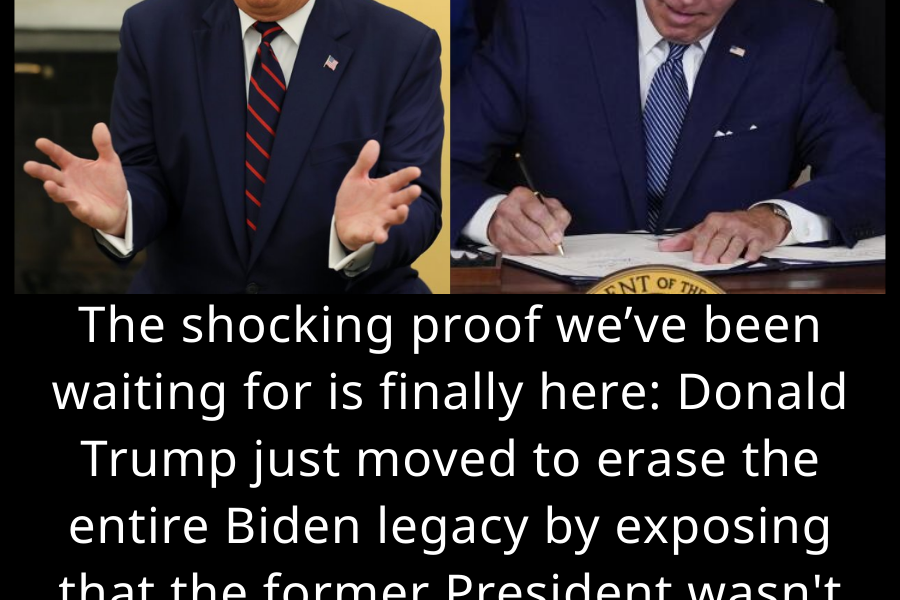
Picture this: the West Wing. The Resolute Desk. A mechanical arm, whirring to life, dutifully scratching a presidential signature onto a thousand documents. This is the autopen—the bureaucratic ghostwriter of the Oval Office, a tool of pure function and efficiency. Until today, it was a mundane footnote in the annals of government. Now, Donald Trump has weaponized it, declaring its output—nearly the entire paper trail of the Biden presidency—null and void.
The announcement wasn’t just a policy shift; it was a narrative detonation. In one sweeping decree, framed with the characteristic rhetoric of “Sleepy Joe” and “Radical Left Lunatics,” Trump didn’t just reverse executive orders. He attempted to un-write history itself.
1. The Autopen Anomaly: Tool or Trespass?
First, a quick dive into the machine. The autopen isn’t some shadowy, illicit device. It’s a practical necessity, used by presidents since Eisenhower to manage the crushing volume of correspondence and minor orders, especially when the president is traveling. Its legal standing has been affirmed for decades; the signature is considered legally binding because it’s executed under the president’s explicit authority.
Trump’s core argument—”The Autopen is not allowed to be used if approval is not specifically given by the President”—is the heart of the controversy. He’s not just questioning policy; he’s alleging a fundamental breakdown of agency, a coup by automaton. The vivid imagery of Biden being “circled” by aides transforms the Oval Office from a seat of power into a stage for a puppet show.
This is a masterstroke of political jujitsu. It bypasses tedious debates over the merits of any single Biden policy and attacks the very legitimacy of their creation. If the hand that signed them wasn’t human, was the mind that conceived them truly presidential?
2. The Legal Labyrinth: Can You Un-sign a Signature?
Now, let’s get academic. The professor in me has to hit the law books, and what we find is a constitutional thunderclap waiting to happen.
The practical and legal chaos of this move is almost unimaginable. We’re not talking about a few orders; we’re talking about a tsunami of nullification. What about:
- Military commissions?
- Disaster declarations for wildfires and hurricanes?
- Appointments to federal boards and agencies?
- International memoranda of understanding?
The U.S. government is a colossal machine that runs on the fuel of legally recognized documents. Trump’s order doesn’t just change the fuel; it claims the last four years of fuel was contaminated and has now seized the engine. The immediate result would be a legal free-for-all, with every entity ever affected by a Biden autopen order rushing to court, creating a gridlock that would make D.C. traffic look like the Autobahn.
This isn’t simply a powerful president undoing his predecessor’s work. That happens. This is a president arguing his predecessor wasn’t the author of his own work, thereby rendering it void from its inception. It’s an argument that, if accepted, doesn’t just reverse policy—it invalidates a presidency on a technicality.
3. The Performance of Power: The Spectacle Over the Substance
But to get bogged down in the legalistic weeds is to miss the larger, more potent point. This move is a quintessential piece of political theater. Its primary power may not lie in its legal enforceability, but in its narrative force.
For his supporters, it’s a righteous act of purification. It’s the digital equivalent of storming the Bastille—tearing down the illegitimate edifice of the “fake” Biden administration. It reinforces the core mythos of the “stolen” election and the “puppet” president.
For the institutionalists and the opposition, it’s an authoritarian fever dream, a blatant power grab that shreds constitutional norms and the peaceful transfer of power.
And for everyone watching at home? It’s the ultimate reality TV plot twist: “Everything you thought was true for the last four years… was a lie.” It’s compelling, it’s confusing, and it ensures that the conversation is no longer about what Biden did, but whether he even did it at all.
The Aftermath: A Nation of Ghost Documents
So, where does this leave us? In a profoundly unstable place.
Trump hasn’t just issued an order; he has launched a philosophical missile aimed at the foundation of modern governance: trust in the document. If a presidential signature can be retroactively declared a fraud, what piece of paper can we ever trust again?
This is bigger than the autopen. It’s about the weaponization of process, the blurring of reality, and the creation of a permanent state of contested legitimacy. The Resolute Desk was meant to be a symbol of steadfast leadership. Now, it’s the centerpiece of a story about a ghostwriter and a presidency that, according to this new narrative, may have never truly put pen to paper.
The battle won’t just be in the courts. It will be in the minds of every American, forced to ask: Was it all just a glitch in the machine?
The archives are burning. And we’re all watching the embers fly. 🔥