(The line between security and civil rights just blurred in Texas. And a governor’s pen may have just drawn a new front in America’s culture war.)
The Texas Proclamation: When a State Declares Its Own “War on Terror”
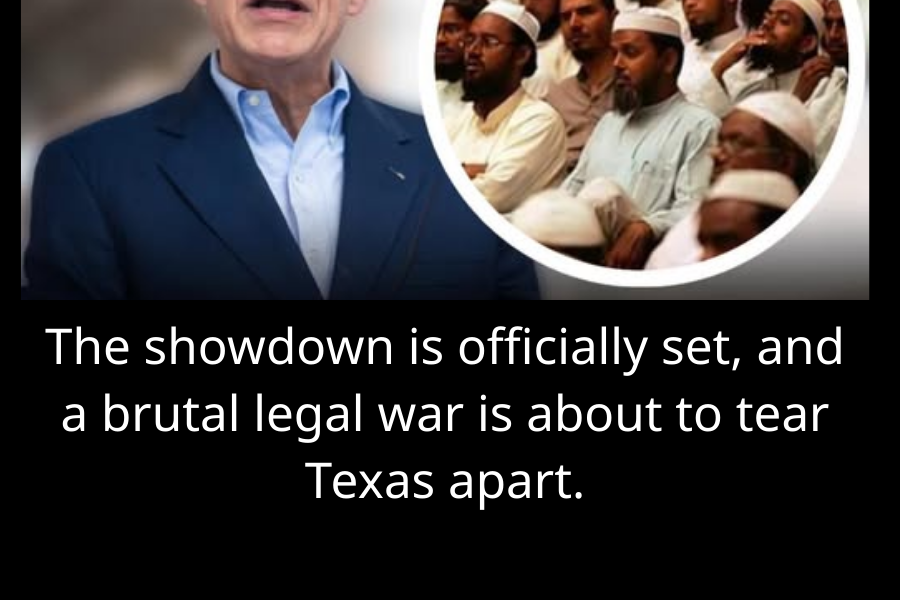
On November 18, 2025, Texas Governor Greg Abbott didn’t just issue a policy. He issued a declaration of ideological identity. With a stroke of his pen, he labeled two entities—the Council on American-Islamic Relations (CAIR) and the Muslim Brotherhood—as “foreign terrorist organizations” under state law.
The immediate effects are tangible: CAIR is barred from buying property in Texas. Its operations are subject to heightened state scrutiny. But the ripple effects are seismic, sparking a firestorm that pits gubernatorial authority against constitutional rights, and state security claims against the very fabric of religious pluralism.
This isn’t a policy dispute. It’s a constitutional and cultural detonation.
1. The “Terrorist” Label: A Legal Cudgel or a Legitimate Shield?
Governor Abbott’s move is unprecedented at the state level. The designation of Foreign Terrorist Organizations (FTOs) has traditionally been the exclusive, evidence-heavy domain of the U.S. State Department, involving intelligence agencies, diplomatic considerations, and a rigorous legal process.
By declaring CAIR—a prominent, decades-old American civil rights organization with chapters across the U.S.—a terrorist entity, Abbott bypassed that federal machinery. His proclamation rests on a controversial, long-asserted claim by some conservatives of CAIR’s ties to the Muslim Brotherhood, which they view as a radical Islamist network.
The legal and practical questions are profound:
-
Can a state unilaterally create its own terror list? Does this infringe on federal authority over foreign policy and national security?
-
What is the standard of evidence? The proclamation cites “publicly available information,” but opponents see a dangerous precedent of designation-by-accusation, devoid of the due process a federal FTO listing entails.
-
What does “scrutiny” mean? The open-ended permission for state agencies to investigate CAIR creates a chilling effect, potentially subjecting donors, event attendees, and allies to suspicion simply for engaging with a legal advocacy group.
This transforms CAIR from a civil society actor into a state-designated adversary within Texas borders.
2. The Coalition of the Condemned: An Unlikely Alliance Rises
The backlash reveals the proclamation’s potential overreach. The condemnation is not coming from Muslim groups alone. It’s a broad, interfaith coalition—a powerful signal that this is being framed as a civil liberties issue, not a sectarian one.
When Baptist, Jewish, Catholic, and other faith leaders stand alongside CAIR, the narrative shifts. It’s no longer “Muslims vs. the State.” It becomes “The Bill of Rights vs. Executive Overreach.” These leaders are calling the move “defamatory” and “harmful,” arguing it casts a shadow of suspicion over an entire religious community and undermines the interfaith trust built over generations.
This alliance is a strategic and moral firewall. It prevents the governor from framing opposition as sympathy for terrorism and instead frames it as a defense of the First Amendment’s twin pillars: religious freedom and freedom of association.
3. The Lawsuit: The Battlefield Moves to the Courtroom
CAIR’s lawsuit is the inevitable and critical next act. Their argument will hinge on several constitutional pillars:
-
The Supremacy Clause: Does Texas’s designation interfere with the federal government’s exclusive power to conduct foreign policy and designate FTOs?
-
The First Amendment: Is this an unconstitutional punishment of a group for its advocacy and religious identity? Does it constitute a “bill of attainder” — a legislative act singling out a person or group for punishment without trial?
-
The Fourteenth Amendment: Does it deprive American citizens (CAIR’s staff, donors, supporters) of liberty and property without due process?
The courts must now answer: Does a governor have the wartime authority to declare ideological enemies within, absent a federal designation or a shooting war?
The Verdict: A State’s Sovereignty or a Slippery Slope?
Governor Abbott’s proclamation is the logical, extreme endpoint of a political philosophy that prioritizes state sovereignty and a hawkish, ideology-driven view of national security. To his supporters, it’s a courageous stand, protecting Texans from a dangerous influence the federal government is too weak or too “woke” to confront.
To his opponents, it is a terrifying precedent. If a state can label a domestic civil rights group a terrorist organization based on ideological opposition and disputed ties, what stops the next administration in another state from designating, for example, a pro-life group or a climate activist organization as a “terrorist entity” for its beliefs and associations?
The lawsuit will grapple with the law. But the public is grappling with a more profound question: In America, can you be declared a terrorist by proclamation, or only by proof?
The Texas courts are about to draw a line. That line will define not just CAIR’s ability to own property, but the limits of state power over the map of American identity itself. ⚖️🗺️