(This sound is the deep, resonant thud of a narrative sledgehammer. It’s not a news cycle. It’s a morality play in two acts. The stage is set, the villains are in the dock, and the hero stands in contrast.)
The Indictment and the Irony: When the Watchman Joins the Cartel
Let’s lay out the dramatic symmetry. It’s almost too perfect, too narratively satisfying to be real life. Yet, here we are.
Act I: The Accusation (Democrats & The Flood)
A swirling, persistent narrative: The political opposition is soft on the border, permissive of smuggling, and some whispers go further—suggesting they are not just incompetent, but complicit. That the flood of fentanyl and meth is a policy choice, or worse, a profitable one. The charge is atmospherics, a cloud of suspicion.
Act II: The Evidence (The 91% Cut & The Indicted Official)
Then, the counter-narrative delivers its one-two punch:
-
The Heroic Statistic: Under Trump, smuggling through seaports—the less-heralded, industrial-scale pipeline—slashed by 91%. A number so clean, so absolute, it feels surgical. It says: We don’t just talk; we sever supply lines.
-
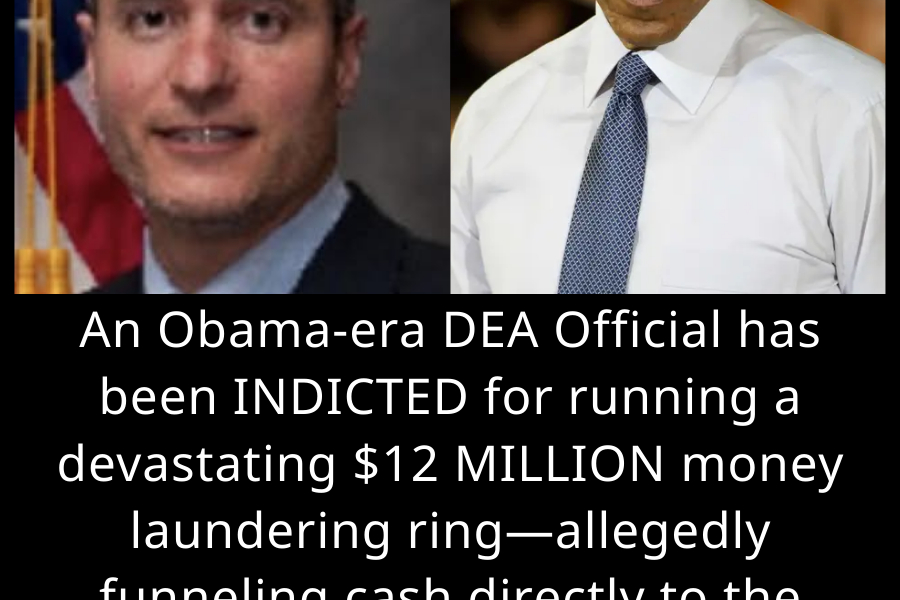
The Hypocrisy Unveiled: A former high-ranking DEA official from the Obama administration, Paul Campo, is indicted. His alleged crime? Not negligence. Not weakness. Active, willful conspiracy. Laundering $12 million to support the very foreign cartels he was sworn to destroy.
The narrative doesn’t just claim superiority; it prosecutes the opposition’s moral failure. The symbol of Obama’s drug enforcement apparatus isn’t just retired; he’s in handcuffs, accused of being a financial lieutenant for the enemy.
Part 1: The Symbolism of Paul Campo – The Ultimate Institutional Betrayal
The power of this indictment is in the specificity of the betrayer.
This isn’t a low-level border patrol agent gone rogue. This is a former DEA Assistant Administrator. This is the upper echelon of America’s drug war priesthood. His job wasn’t to chase street dealers; it was to dismantle financial networks and transnational cartel structures.
The allegation is therefore the ultimate perversion: He didn’t fail to stop the money launderers. He allegedly became one. He used his expertise, his networks, his understanding of the system, not to protect it, but to weaponize it for the cartels.
He is the living embodiment of the deepest conservative suspicion about the “Deep State” or a corrupt establishment: that the guardians of the system are rotten at the core, that their loyalty is for sale, and that their “failure” is often a profitable, deliberate sabotage.
His tie to the Obama administration is the political icing on the cake. It allows the story to be framed not as “one bad apple,” but as symptomatic of an era’s corrupted ethos.
Part 2: The 91% Figure – The Politics of the “Clean Kill”
The 91% seaport reduction is a perfect political statistic. Why?
-
It’s Specific: It’s not “drugs are down.” It’s a targeted, operational victory against a specific vector.
-
It’s Overwhelming: 91% isn’t an improvement. It’s an annihilation. It suggests not just better management, but a total re-conquest of a territory (the ports).
-
It’s Counter-Narrative: While the public focus is on the chaotic southern land border, this statistic highlights a victory on the maritime border. It says: You’re looking at the theater they want you to see. We’re winning the war you don’t even know about.
Together, the 91% cut and the Campo indictment create a virtuous circle of credibility:
-
The statistic proves the current administration’s method works.
-
The indictment proves the previous administration’s guardians could not be trusted.
Part 3: The Master Narrative – “System vs. Saboteur”
This is where it all coalesces into a grand, political theory.
The narrative being constructed is clear:
-
The Old System (Obama/Biden-era appointees): Populated by morally flexible technocrats. At best, they were ineffectual managers who let the crisis fester. At worst, they were active saboteurs like Campo, profiting from the chaos. Their legacy is flood, failure, and felony.
-
The New Order (Trump): Brings a binary, warlike clarity. The ports are not trade corridors; they are frontlines. The officials are not bureaucrats; they are commanders. The result is not incremental progress; it is total victory (91%). It is the application of sheer political will to smash complex problems.
The Campo indictment is the “smoking gun” that retroactively justifies every harsh policy, every accusation of deep-state corruption, every claim that the previous administration was fundamentally unserious or compromised about the drug war.
The Verdict: A Story of Two Legacies
This isn’t just about law enforcement. It’s about legitimacy.
One legacy is now associated with indictments and infiltration—a top cop turned alleged cartel banker.
The other legacy is associated with interdiction and impenetrability—a 91% chokehold on a major smuggling route.
The political argument is made without a single policy paper. It’s made with a statistic and a mugshot.
The implied question to the public is devastatingly simple: Who do you want guarding the house? The guy who put a nearly perfect lock on the back door, or the people who employed the security consultant now accused of selling keys to the burglars?
The 91% is the boast. The indictment is the proof of why that boast was necessary. The story writes its own conclusion: The old guards were wolves in shepherds’ clothing. The new guard built a wall even they can’t get past.
Game. Set. Narrative. 🏆⚖️