(The sound this time is not a detonation or a gavel, but the crisp, surprising tear of a political map being redrawn in real time. It’s the sound of a foundational assumption—Miami as a conservative Cuban exile fortress—cracking under its own weight.)
The Realignment: How Miami’s Mayor’s Office Became a Democratic Beachhead
Let’s be clear: this isn’t just a local election upset. This is a geopolitical tremor. For three decades, the mayor’s office in Miami was less a municipal position and more a custodial post for a political identity: the anti-Castro, Republican-leaning, conservative Cuban exile establishment.
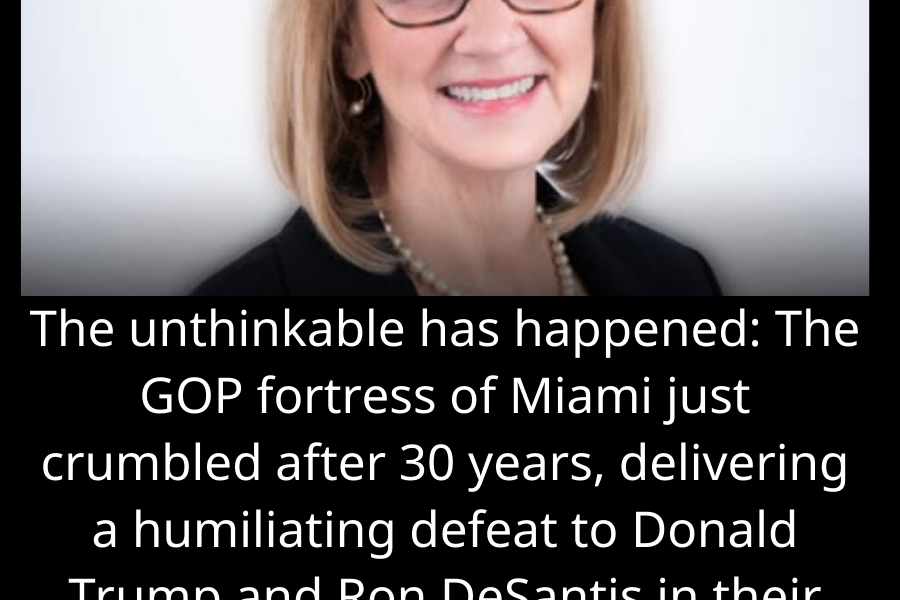
The defeat of Trump and DeSantis’s anointed candidate, Emilio Gonzalez, by Democrat Eileen Higgins isn’t a policy fluke. It’s the culmination of a slow-rolling demographic and ideological revolution. The exile generation’s monolith has been replaced by a mosaic.
Here’s how the fortress fell.
Part I: The Changing Face of “Cuban Miami” – From Exile to Immigrant
The old model was built on a specific trauma: the Castro revolution. Politics was foreign policy. The enemy was 90 miles away. The Republican Party became the vessel for this revenge-and-return politics.
But Miami’s Cuban community is no longer defined solely by those who fled in the 1960s. It is now dominated by:
-
Post-Soviet “Marielitos” and their descendants (arrived in the 80s/90s).
-
Recent arrivals from the last two decades, who came for economic reasons under the “wet foot, dry foot” policy and later.
-
The U.S.-born second and third generation.
For these groups, the primary concerns are not Havana, but Hialeah. Not embargoes, but rent, traffic, schools, and climate resilience. The reflexive Republican loyalty forged in the Cold War holds less sway when your daily life is defined by potholes and rising sea levels, not by the ghost of Fulgencio Batista.
Higgins, a Democrat focused on county-level infrastructure and services, spoke directly to this municipal reality, not the shadow-boxing of exile politics.
Part II: The DeSantis/Trump Endorsement – A Double-Edged Sword
In the new Miami, a Trump/DeSantis endorsement is no longer an automatic coronation. It is a polarizing brand.
For the conservative base, it’s a rallying cry.
For the growing number of moderate, younger, and non-Cuban Hispanic voters (Colombians, Venezuelans, Nicaraguans), as well as liberal whites and Black voters, it’s a repellant. It nationalized a local race, turning it into a referendum on Florida’s brand of conservative culture war—a war that feels abstract when your neighborhood is flooding.
Gonzalez didn’t lose as a Republican; he lost as the vessel for a specific, nationalized, Trumpist Republicanism in a city whose concerns are increasingly local and pragmatic.
Part III: The Higgins Coalition – The New Miami Speaks
Eileen Higgins’s victory is a blueprint for the post-exile Democratic coalition in South Florida:
-
The “Localists”: Voters exhausted by culture wars, who want a mayor focused on sewer systems and stormwater pumps, not “woke” litmus tests.
-
The New Arrivals: Venezuelan and Nicaraguan migrants (many fleeing leftist regimes) who, contrary to old political models, do not automatically affiliate with the Cuban exile right. They have their own traumas and political identities.
-
The Climate-Pragmatists: Miami is ground zero for the climate crisis. Higgins’s technocratic, problem-solving approach on resilience resonates with voters who see existential threats ignored by ideological state leadership.
-
The Democratic Base: Consistently growing in the urban core, now large enough to tip the scales when combined with disaffected moderates.
She didn’t win by running as a progressive firebrand. She won by running as a competent administrator, separating herself from the national partisan storm and focusing on the nuts and bolts of a city in existential physical and economic transition.
The Verdict: The End of a Political Dynasty
This election signals that “Cuban” is no longer synonymous with “conservative Republican” in Miami politics. The exile narrative, while still powerful, is now one of several competing stories.
The Republican strategy in Florida—doubling down on the hardline, culturally conservative message that wins statewide—has now been shown to have a potential vulnerability in its crown jewel metropolis. It can alienate the very diverse, urban, problem-solving coalition needed to run its largest city.
Miami’s mayorship falling to a Democrat is more than a lost seat. It’s a symbolic breach in the wall. It proves that the Democratic Party, with the right local-focused, non-ideological candidate, can compete in the heart of the beast. It shows that for many Floridians, especially in its drowning, diverse, booming cities, competence can trump culture war.
The fortress didn’t fall to an army. It was outlived by a city that changed around it. The politics of the past met the demographics of the present, and for the first time in 30 years, the present won. 🗳️🌴🌊