The Actress and the 69 Million: When Hollywood Speaks, Does Anyone Listen?
Let’s start with the image.
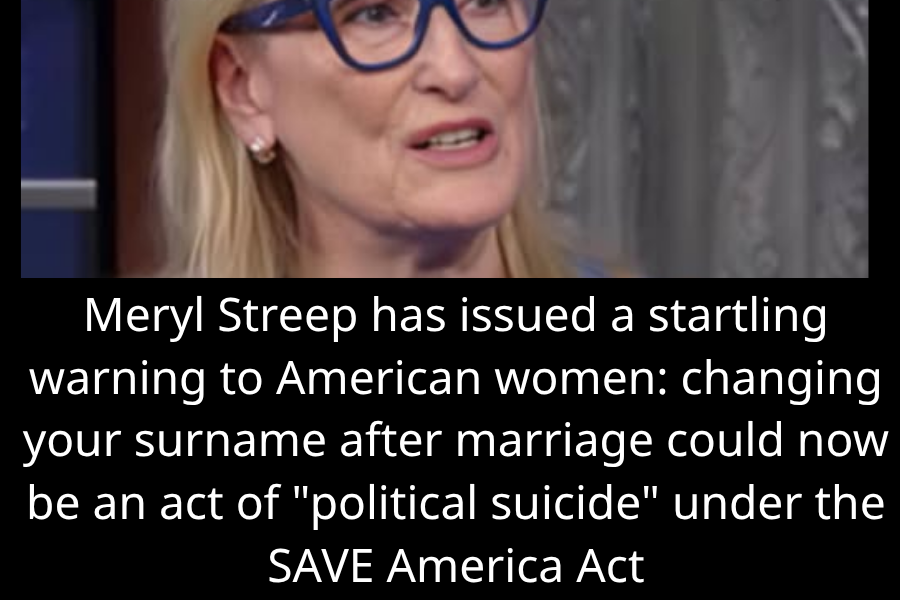
Meryl Streep. The greatest actress of her generation. Three Oscars. Dozens of nominations. A career that spans five decades and includes some of the most iconic performances in film history. She is sitting on the couch at The Late Show with Stephen Colbert. The lights are warm. The audience is attentive. The host is deferential. She is doing what celebrities do: using her platform to talk about something that matters to her.
The subject is the SAVE America Act. The claim is that it could create significant hurdles for married women who have changed their names. The number is sixty-nine million. That is how many women could be impacted. That is how many women could be forced to “prove who they are” because their current names on voter rolls would not match their original birth certificates.
Streep is not a politician. She is not a lawyer. She is not an expert on election law. She is an actress. But she is also a citizen. She is also a woman. She is also someone who changed her name when she got married. She is speaking from experience. She is speaking from conviction. She is speaking for the sixty-nine million women who do not have a platform, who do not have a late-night show, who do not have millions of people hanging on their every word.
The question is whether anyone is listening. The question is whether her words will matter. The question is whether the SAVE America Act will be defeated because Meryl Streep spoke out against it.
Probably not. Probably the bill will pass or fail based on the same calculations that have always determined the fate of legislation: power, money, and votes. But Streep’s intervention is not meaningless. It is not useless. It is not without consequence. Because she is doing something that the opponents of the SAVE Act have failed to do. She is making it personal. She is making it human. She is making it real.
The Name Change
Streep changed her name when she got married. That is what women do. That is what millions of women have done for generations. They take their husband’s name. They become someone new. They build a life, a family, an identity around that name. It is not a small thing. It is not a trivial thing. It is a fundamental part of who they are.
But their birth certificates do not change. Their birth certificates still have their maiden names. Their birth certificates are frozen in time, a record of the person they were before they became the person they are. That is not a problem. That is not a flaw. That is how birth certificates work.
Under the SAVE Act, that becomes a problem. Because the SAVE Act requires the name on the birth certificate to match the name on the voter registration. Exact match. No exceptions. No accommodations. No recognition that people change their names for perfectly legitimate reasons.
Streep is pointing out the absurdity. She is saying, in her own way, that this is not election security. This is not integrity. This is not protection. This is a hurdle. This is a barrier. This is a way of making it harder for millions of women to vote.
She is right. The SAVE Act does not solve a real problem. Non-citizen voting is already illegal. There is no evidence that it is happening in significant numbers. There is no evidence that it is affecting election outcomes. The SAVE Act is a solution in search of a problem. And the problem it creates is real. It is large. It is sixty-nine million women.
The Platform
Streep has a platform. That is what makes her different from the sixty-nine million women she is speaking for. She has a platform because she is famous. She has a platform because she is talented. She has a platform because she has spent decades building a career that gives her access to audiences that most people can only dream of.
She is using that platform to talk about the SAVE Act. She is using it to warn women about what this bill could mean for them. She is using it to put pressure on the politicians who support the bill. She is using it to make the issue personal, human, real.
The critics will say that she should stay in her lane. They will say that she is an actress, not a political analyst. They will say that she does not understand the nuances of election law. They will say that she is being used by the Democratic Party to spread misinformation.
They said the same thing about other celebrities who spoke out about other issues. They said it about Jane Fonda and the Vietnam War. They said it about Harry Belafonte and the civil rights movement. They said it about every actor, every musician, every artist who ever used their platform to talk about something that mattered.
Streep does not care. She is not going to stay in her lane. She is not going to limit herself to reading scripts and accepting awards. She is going to speak. She is going to use her voice. She is going to do what she can to stop a bill that could disenfranchise millions of women.
That is her right. That is her responsibility. That is what citizenship looks like.
The Audience
Colbert’s audience is not the typical audience for a discussion of election law. They are there to laugh. They are there to be entertained. They are there to see a famous actress talk about her movies, her life, her career. They are not there to hear about voter registration requirements and birth certificate matching.
But they listened. Because Streep made it interesting. She made it personal. She made it about something they could understand. She told them that sixty-nine million women could be affected. She told them that she is one of those women. She told them that this is not a hypothetical problem. This is real. This is now. This is happening.
Some of them will remember. Some of them will go home and talk to their friends, their families, their neighbors. Some of them will call their representatives. Some of them will vote based on what they heard. Some of them will become part of the movement to stop the SAVE Act.
That is how change happens. Not through press releases. Not through speeches on the Senate floor. Not through op-eds in the newspaper. Through conversations. Through connections. Through people talking to people about things that matter.
Streep started a conversation. She used her platform to reach millions of people. She made them care about something they did not care about before. That is not nothing. That is not useless. That is not without consequence.
The Timing
Streep appeared on Colbert’s show on April 1. April Fools’ Day. The timing was probably a coincidence. The show books guests weeks in advance. The date is not something that celebrities usually control. But the coincidence is striking. Because the SAVE Act is an April Fools’ joke that is not funny.
The joke is that the bill is supposed to protect election integrity. The punchline is that it would disenfranchise sixty-nine million women. The laughter is hollow. The humor is dark. The reality is grim.
Streep is not laughing. She is not joking. She is not playing a character. She is being herself. She is being a citizen. She is being a woman. She is being someone who changed her name when she got married and does not want to be punished for it.
The SAVE Act is not a joke. It is a threat. It is a threat to the voting rights of millions of American women. It is a threat to the fundamental principle that every citizen should be able to vote without jumping through unnecessary hoops. It is a threat to democracy itself.
Streep is using her platform to warn people about that threat. She is using her voice to say that this is not okay. She is using her fame to draw attention to an issue that might otherwise be ignored.
That is what celebrities can do. That is what celebrities should do. That is what celebrities have always done. They use their platforms to speak truth to power. They use their voices to amplify the voices of the voiceless. They use their fame to shine a light on the dark corners of our politics.
Streep is doing that. She is doing it well. She is doing it effectively. And the people who support the SAVE Act are probably not happy about it. Because she is reaching people they cannot reach. She is convincing people they cannot convince. She is making the issue personal in a way that no press release, no speech, no advertisement ever could.
The Last Word
Meryl Streep went on The Late Show with Stephen Colbert and talked about the SAVE America Act. She said it could create significant hurdles for married women who have changed their names. She said it could force millions of women to “prove who they are.” She said it could make it harder for them to vote.
She is right. The SAVE Act is a solution in search of a problem. It does not solve a real issue. It creates a real issue. It creates an issue for sixty-nine million women. It creates an issue for anyone who has ever changed their name. It creates an issue for anyone who does not have a passport. It creates an issue for the busy working moms who are already juggling too much.
Streep is not a politician. She is not a lawyer. She is not an expert on election law. She is an actress. But she is also a citizen. She is also a woman. She is also someone who changed her name when she got married. She is speaking from experience. She is speaking from conviction. She is speaking for the sixty-nine million women who do not have her platform, her voice, her fame.
The question is whether anyone is listening. The question is whether her words will matter. The question is whether the SAVE Act will be defeated because Meryl Streep spoke out against it.
Probably not. Probably the bill will pass or fail based on the same calculations that have always determined the fate of legislation. But Streep’s intervention is not meaningless. It is not useless. It is not without consequence. Because she is doing something that the opponents of the SAVE Act have failed to do. She is making it personal. She is making it human. She is making it real.
And sometimes, that is enough. Sometimes, that is what changes minds. Sometimes, that is what moves votes. Sometimes, that is what saves democracy.
Streep is not the hero of this story. The hero is the sixty-nine million women who could be disenfranchised by the SAVE Act. The hero is the working mom who is already juggling too much. The hero is the woman who changed her name when she got married and does not want to be punished for it.
Streep is just the messenger. But she is a good messenger. She is a credible messenger. She is a messenger who reaches people that other messengers cannot reach. And that is valuable. That is important. That is worth something.
The SAVE Act is not a joke. It is a threat. And Meryl Streep is doing her part to stop it. That is not nothing. That is not useless. That is not without consequence. That is what citizenship looks like. That is what democracy looks like. That is what it means to use your platform for something that matters.