The Omar Enigma: A Political Thriller Written in Financial Disclosures
The Ledger Doesn’t Lie. But It Does Tell One Hell of a Story.
Let’s start with the number. It’s not a statistic; it’s a character in this drama.
3,500%.
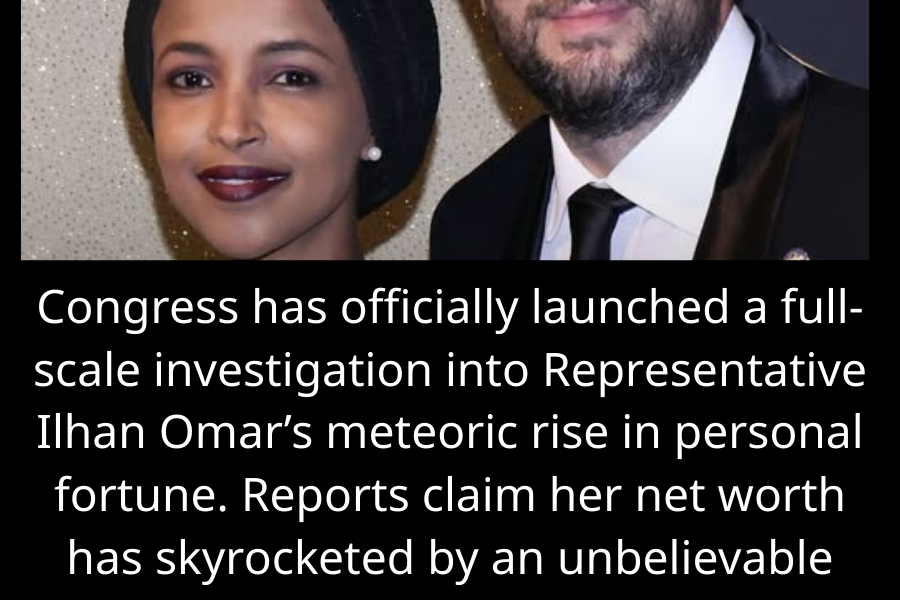
That’s the reported increase in net worth at the center of the House investigation into Representative Ilhan Omar (D-Minn.). It’s a figure so audacious it feels less like a financial disclosure and more like a plot point in a season of Billions. From a valuation of between $1 and $1,000 for a venture capital firm one year, to between $5 million and $25 million the next. A wine business leaping from the $50,000 range to the “million-to-five-million” bracket. This isn’t gradual wealth accumulation. This is a financial Big Bang.
And in the swirling cosmic dust of that explosion, we find the supporting cast: Tim Mynett, Omar’s husband and political consultant-turned-venture capitalist, and his longtime business partner, William Hailer—a Democratic operative whose career reads like a map of the party’s infrastructure, now accused of being a cartographer of fraud.
This is the “Follow the Money” moment, but the trail doesn’t lead to a simple safe. It leads into a labyrinth of LLCs, venture funds, cannabis promises, and bottles of wine, all built on the shifting sands of political connections.
The Cast of Characters: Operatives, Investors, and a Web of LLCs
To understand the allegation, you must understand the ecosystem. This isn’t a story of a rookie politician stumbling into scandal. It’s a story of political capital being parlayed into financial capital, with disastrous, litigious results.
-
William Hailer: The linchpin. A senior advisor to former DNC Chair Tom Perez. A longtime aide to Keith Ellison. A Democratic insider’s insider. His pivot from politics to venture capital with Tim Mynett is the original sin of this narrative. The lawsuits paint a consistent portrait: a man who used his political sheen and promises of big-name backers (like falsely listing former Sen. Max Baucus as an advisor) to solicit investments for ventures—cannabis in South Dakota, wine in California—that allegedly failed to deliver, leading to accusations of fraud and swindling.
-
Tim Mynett: Omar’s husband. The bridge between the political and financial worlds. His firm, E Street Group (co-founded with Hailer), collected nearly $3 million from Omar’s campaign coffers—a legally murky but permissible move that sparked the original “OMAR Act” backlash. He is Hailer’s partner in every venture now under scrutiny.
-
The Ventures Themselves: E Street Group. Rose Lake Capital. eStCru Wine. Badlands Ventures. They form a Matryoshka doll of entities. Money and allegations flow between them. A settlement in one lawsuit (the cannabis case) is paid from funds whose source—given Hailer’s reportedly empty bank accounts—is itself a mystery, prompting the local press to ask: Where did the repayment money come from?
The pattern from the lawsuits, as alleged by investors, is hauntingly similar: lavish promises of huge, quick returns (200% in 18 months on wine; multi-million-dollar follow-on investments for cannabis), followed by delays, excuses, and ultimately, allegations of misappropriation.
The Political Tinderbox: Why This Investigation Ignites Now
The House probe isn’t happening in a vacuum. It’s landing in a perfect storm of political narratives.
-
The Minnesota Fraud Epidemic: The backdrop is a state reeling from the uncovering of what may be the nation’s largest-ever public benefits fraud, estimated in the billions, much of it centered within Minnesota’s Somali community. While there is no evidence linking Omar to that scheme, the cultural and political atmosphere is one of heightened sensitivity to fraud allegations. The question, as posed by critics, becomes insidious and potent: Is this a pattern?
-
The “Squad” Target: Ilhan Omar is not just any congressperson. She is a founding member of “The Squad,” a progressive lightning rod, and a figure of relentless conservative focus. The investigation fulfills a long-stated goal of her political opponents. It also creates an excruciating dilemma for Democratic leadership: how fiercely do you defend a prominent progressive when the allegations are this specific, financial, and laden with bipartisan scandal-adjacent figures like Hailer?
-
The Erosion of Trust: At its core, this story taps into a deep, bipartisan public cynicism. It’s about the alchemy of influence. The movement from political consulting firms paid by campaign donations (Omar’s $3M to E Street) to high-risk private ventures with mysteriously soaring valuations. It feels, to many, like a closed loop of insider enrichment. The presence of a seasoned DNC operative like Hailer at the center only amplifies that perception.
The Unanswered Questions: The Gaps in the Ledger
The financial disclosure forms show the breathtaking result—the 3,500% leap. What they don’t show is the engine.
-
Valuation vs. Valuation: What specific, auditable event justified the re-valuation of Rose Lake Capital from a nominal sum to up to $25 million? Was it a breakthrough investment? A massive inflow of capital from new limited partners? Or is it a paper valuation based on speculative future promises—the same kind that allegedly ensnared other investors?
-
The Source of the Settlements: When Hailer returned nearly $2.4 million to settle the cannabis lawsuit, the discovery process showed he had less than $750 to his name. This is the central mystery. Where did that money come from? Did it come from the profits of the very ventures under investigation? From a new line of credit? This unanswered question hangs over every other transaction.
-
The Line Between Spouse and Stakeholder: While Omar is not accused of direct involvement in the business dealings, the staggering increase in her disclosed net worth is solely tied to her husband’s share in these ventures. The investigation will inevitably probe the boundary between her official role and her household’s financial windfall. Can they be wholly separated?
The Verdict: A Story Still Being Subpoenaed
Right now, this is not a story of guilt or innocence. It is a story of opacity meeting scrutiny.
It is a political thriller with a filing cabinet full of subpoenas. A narrative where Democratic insider politics, the high-risk world of venture capital, and the relentless glare of partisan investigation collide.
The 3,500% figure is a flare in the night sky. Congress has now sent up search parties to find its source. Whether they discover a legitimate, if spectacular, business success, or the smoldering wreckage of broken promises and misplaced trust, will determine not just Ilhan Omar’s political future, but will write a new chapter in the oldest Washington story of all: how power, money, and influence intertwine, and what happens when the ledger is finally opened to the light.