The Crossroads of Fear and Freedom: Dissecting the “Incompatibility” Narrative
The Argument, Loud and Unfiltered
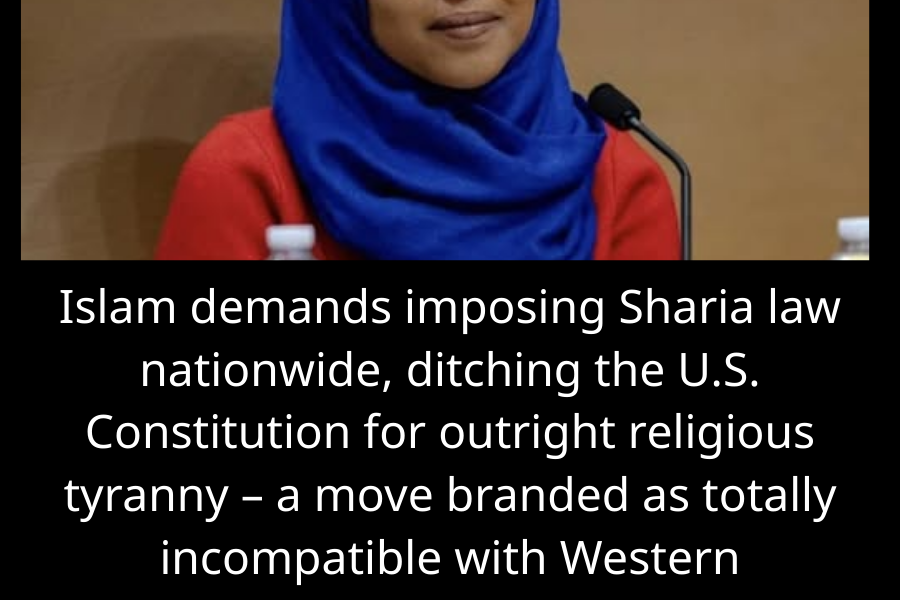
Let’s name the premise directly, because it’s sitting in the room like a charged device: Islam, as a religion and political ideology, is an existential threat to the American republic. Its goal is to supplant the Constitution with Sharia law, institute religious tyranny, and is fundamentally, irreconcilably opposed to Western values of freedom and equality. Therefore, its adherents—particularly those in public office—represent a fifth column, and the ideology itself is “toxic” and has “no place in this country.”
This is a worldview. It is not a nuanced policy position; it is a civilizational thesis built on fear, a selective reading of history, and a categorical rejection of pluralism. To engage with it, we must first understand its emotional core before dissecting its factual and philosophical flaws.
Deconstructing the Foundations: Monoliths, Misreadings, and American History
The argument rests on three shaky pillars that crumble under scrutiny.
Pillar 1: The Monolithic “Islam.”
This is the foundational error. To speak of “Islam” as a single, unified political entity is like speaking of “Christianity” as one. It ignores the vast, lived reality of 1.8 billion people across continents, cultures, and interpretations. The “Islam” of a Sufi mystic in Senegal, a tech entrepreneur in Dubai, a reformist scholar in Indonesia, and a conservative cleric in rural Pakistan are not the same. To conflate the political project of groups like the Taliban or ISIS with the faith of a Muslim doctor in Chicago or a Muslim congresswoman in Minnesota is not just inaccurate; it is a form of intellectual abdication. It attributes the actions of the most violent, politically extreme adherents to the entirety of the faith community—a standard we would never apply to any other major religion after its extremists commit violence.
Pillar 2: The Misunderstanding of Sharia & “Religious Tyranny.”
“Sharia” is not a single, codified book of law like the U.S. Code. It is a broad ethical and legal framework derived from the Quran, the sayings of the Prophet (Hadith), and centuries of scholarly interpretation (fiqh). For the vast majority of the world’s Muslims, it governs personal rituals, charity, family law, and ethics. The call to “implement Sharia” in the political sense is a modern, Islamist political ideology, not the unanimous demand of the global faith. Furthermore, the claim that it seeks to replace the Constitution assumes American Muslims are not loyal to the Constitution—a claim unsupported by evidence and contradicted by the oaths they take as citizens, soldiers, and public officials.
Pillar 3: The Selective Amnesia of American History.
The rhetoric of a religion being “incompatible” with American values and having “no place in this country” is a haunting echo of past chapters we are meant to have learned from. It was said about Catholics in the 19th century (feared as loyal to the Pope over the President). It was said about Jews. It is the same language of nativist panic that fueled the Chinese Exclusion Act and Japanese internment. The American experiment is not, and has never been, about a pre-existing cultural or religious purity test. It is an idea: E pluribus unum. Out of many, one. The “freedom and equality” we cherish were not pristine gifts but hard-fought expansions of the circle of “we the people.” To declare an entire world religion incompatible is to betray that very idea.
The Omar Factor: The Human Flashpoint
This argument doesn’t exist in a theoretical vacuum. It is often weaponized against specific individuals, most prominently Representative Ilhan Omar. The subtext is potent: Here is the proof. A “Radical Muslim” in our Congress. The conflation begins: her criticism of Israeli policy becomes “anti-Semitism,” her advocacy for immigrant rights becomes “support for terrorism,” her very identity becomes evidence of the “toxic ideology.”
This is the political utility of the “incompatibility” thesis. It transforms complex policy debates and legitimate political dissent into an existential litmus test of allegiance. It bypasses arguments about economics, foreign policy, or healthcare by invoking a primal fear: They are not one of us, and they seek to destroy us.
The True Incompatibility: Not Islam vs. America, But Fear vs. The First Amendment
The real clash of civilizations happening here is not between Islam and the West. It is between fear-based identity politics and constitutional pluralism.
The First Amendment’s Religion Clauses do not say, “Freedom of religion, except for ones some find threatening.” They create a secular government that protects the free exercise of all religion while preventing the establishment of any official faith. This framework is what allows Hasidic Jews, Southern Baptists, Sunni Muslims, and atheists to sit in the same Congress. Their loyalty is not to a state religion, but to the constitutional order that protects them all.
To demand that Muslim Americans renounce parts of their faith as a condition of full citizenship or public service is to impose a religious test for office, explicitly banned by Article VI of the very Constitution the argument claims to defend.
The Path Forward: Vigilance for Principles, Not Prejudice
This does not mean a naive relativism. America must, and does, vigorously oppose political Islamism that advocates violence and theocratic tyranny, just as it opposes Christian nationalism that seeks the same. The standard is not religion, but allegiance to constitutional democracy and the rejection of political violence.
The answer to fear is not more fear. It is the confident application of our own principles:
-
Judge individuals by their actions and oaths, not their faith. Does a public official uphold the Constitution? That is the only question.
-
Separate faith from political ideology. Oppose Islamism, the political project, through debate and policy, not by demonizing Islam, the religion.
-
Remember the pattern. The language of religious and cultural “incompatibility” has always been the harbinger of injustice, from internment camps to travel bans.
The final “TRUTH” is this: America is not fragile. Its ideals can withstand critique, debate, and the diverse faiths of its people. What undermines it is not the crescent on a Capitol Hill office building, but the abandonment of its own foundational promise: liberty and justice, for all. The moment we exclude a whole group from that “all” based on their scripture, we don’t protect America. We surrender the very thing that makes it worth protecting.