(This is no longer a news report. It is a closing argument delivered directly to the jury of the public. The language isn’t analytical; it’s prosecutorial. The goal isn’t to inform, but to indict. This is the sound of a narrative reaching its final, furious stage: the demand for punitive justice.)
The Call for the Dock: When Political Failure Becomes a Criminal Indictment in the Public Square
The frame has decisively shifted. This isn’t about whether Governor Walz failed. The text asserts that as established fact. This is about what the failure is called, and what its price must be.
The argument builds like a prosecutor’s summation, brick by damning brick:
-
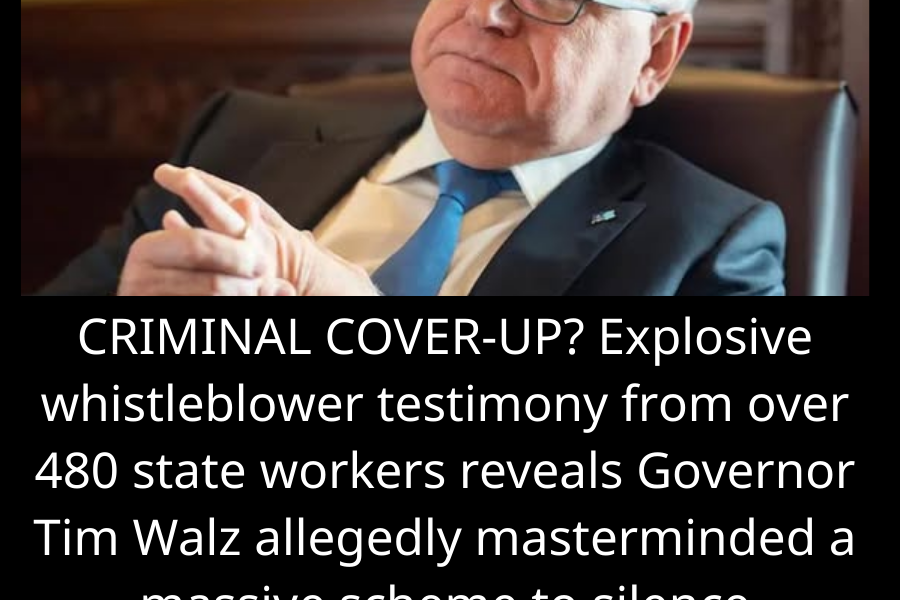
The Scale & Conspiracy: “Over 480 DHS workers”… “covered up years”… “totaling over a billion.” This is not a mistake; it’s a sustained, institutional conspiracy of silence.
-
The Villain’s Action: “Retaliated”… “threatening their jobs”… “increased monitoring, intimidation.” The governor is no longer passive or negligent. He is actively malevolent, a boss using state power to silence truth-tellers.
-
The National Betrayal: “How many other states?”… “federal tax dollars”… “$38 trillion in debt.” The crime escapes Minnesota’s borders. It becomes a treason against the American taxpayer, a direct theft from the pockets of the struggling middle class and the future of the young.
-
The Political & Cultural Culprit: “Foreigners supported by Democrats are looting the treasury.” This is the master narrative fuse. It connects the financial crime to immigration policy (“foreigners”) and partisan ideology (“supported by Democrats”). The “looting” isn’t mere fraud; it’s ideological pillaging.
The final, screamed questions—“Where are the consequences?? Where is the arrest and prison sentence?”—are not questions. They are a verdict and a sentencing demand, issued by the people over the heads of the courts.
Part 1: From “Mismanagement” to “Cover-Up” – The Language of Criminal Intent
The critical leap here is from civil failure to criminal culpability.
“Mismanagement” implies error, poor oversight, bureaucratic blindness. A political problem.
A “cover-up” implies knowledge, intent, and a conscious act to conceal wrongdoing. A criminal problem.
By citing 480 whistleblowers alleging retaliation, the narrative installs mens rea—a guilty mind—into the story. Walz isn’t portrayed as a governor who didn’t know. He’s the governor who knew, was warned, and chose to threaten the warners. This transforms him from a hapless administrator into the alleged ringleader of a retaliatory scheme, a classic obstruction charge waiting to be filed.
Part 2: The “Federal Tax Dollar” Gambit – Nationalizing the Outrage
This is a masterstroke of rhetorical escalation. By anchoring the fraud in “federal programs” and “federal tax dollars,” the speaker explodes the story beyond St. Paul.
This does two things:
-
It Makes Every American a Victim: A farmer in Iowa, a waitress in Ohio, a retiree in Florida—all are now personally robbed. The $1 billion isn’t Minnesota’s problem; it’s yours.
-
It Invites Federal Intervention: If this is a federal crime (misuse of federal funds, wire fraud, conspiracy), then the FBI and DOJ have jurisdiction. It’s a direct appeal for the federal government to step in and arrest the state governor, creating a constitutional crisis and the ultimate political theatre.
The “$38 trillion in debt” line sharpens the sting. It says: While you’re skipping coffee to pay your bills, they were handing out billion-dollar bundles to fraudsters.
Part 3: The Final Frame – “This is not okay.”
This simple, understated phrase is the emotional core. It’s the voice of exhausted, furious decency. After the numbers, the accusations, the scale, it returns to a basic, moral plumb line.
It’s the line that bypasses all political spin and legal jargon. It speaks directly to the sense of fundamental, violated fairness. It’s what you say when you’ve run out of complex arguments and are left with the raw, unassailable truth of injustice.
It makes the demand for prison not seem like hyperbole, but like the only proportionate response to a violation this basic.
The Verdict: The People vs. Tim Walz
This text represents the final stage of a political scandal’s life cycle: the thirst for carceral justice. The polls are assumed. The resignation is seen as insufficient. The debate is over. All that remains is the demand for state-sanctioned punishment.
It is an attempt to create an irresistible public pressure that bends the slow gears of the legal system. It shouts at county prosecutors, the state attorney general, and the U.S. Attorney: “We, the people, have tried him in the court of public opinion. We have found him guilty. Now, you—the system—must make it official with handcuffs and a cell.”
The narrative has completed its journey:
-
Discovery: A fraud is uncovered.
-
Politicization: It’s linked to cultural and partisan divides.
-
Personalization: The blame is fixed on a single leader.
-
Criminalization: That leader’s actions are re-framed as intentional crimes.
-
Punishment: The only acceptable outcome is his imprisonment.
They are no longer asking for an election. They are demanding a perp walk. The story won’t die because its proponents have moved past wanting a political solution. They are now chasing a catharsis that only a mugshot and a sentencing hearing can provide.
The call isn’t for a new governor. It’s for an orange jumpsuit. ⚖️🔒