The Return of the Asylum: Trump’s Call for a New Era of Institutionalization
WASHINGTON — The policy proposal is both historic and familiar: a call for the large-scale return of state-run mental health institutions. When former President Donald Trump states, “We’re going to HAVE to bring them back… you’ve GOT to get these people off the streets,” he is not just suggesting a new healthcare initiative. He is directly linking the most visible crises of urban America—homelessness, disorder, public drug use—to a single, sweeping solution from a darker chapter of American social policy.
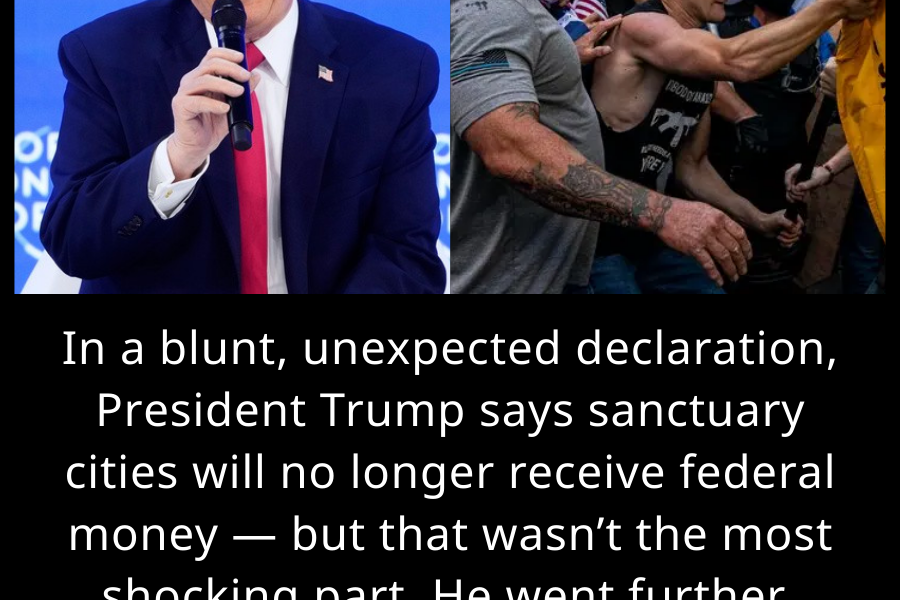
This is not a nuanced discussion of community-based care or funding for outpatient services. It is a declaration of a clearing operation, framed as a necessary act of public salvation. And it is inextricably tied to his concurrent vow to defund sanctuary cities—creating a coherent, if controversial, vision of restored order through coercion and withheld funds.
The Historical Ghost and the Modern Crisis
Trump’s proposal evokes the era of the state mental asylum, a system that reached its peak in the mid-20th century before being largely dismantled from the 1960s onward. That dismantling—driven by a combination of horrific abuses exposed within institutions, the advent of antipsychotic medications, and a civil rights-oriented push for deinstitutionalization—was intended to be paired with robust community mental health centers. That second part never fully materialized.
The result, as argued by proponents of a more forceful approach, is the current landscape: a patchwork of inadequate services, leading to “trans-institutionalization,” where those with severe, untreated mental illness cycle between homelessness, emergency rooms, and jails. For Trump and his supporters, the visible suffering and disorder on streets in cities like San Francisco, Los Angeles, and Portland are the direct, catastrophic proof of a failed liberal experiment.
His solution is a pendulum swing back toward involuntary commitment and centralized custody. The imperative “you’ve GOT to get these people off the streets” frames the issue not as one of individual health, but of public hygiene and safety.
“This is the politics of the clean sweep,” says Dr. Anya Petrova, a historian of medicine and public policy. “Trump is bypassing fifty years of complex, fraught debate about patient autonomy, community integration, and civil rights. He is reviving a binary, mid-century logic: the streets or the asylum. It’s a powerfully simple narrative for voters who see urban disorder as a symbol of national decay. It promises a visible, physical solution—removal—as opposed to the slow, invisible, and often frustrating work of supportive housing and voluntary treatment.”
The Sanctuary City Nexus: Funding as a Cudgel
The proposal cannot be separated from his pledge to cut off federal funds to sanctuary cities. This creates a pincer movement:
-
On one flank: Withhold money from cities that limit cooperation with federal immigration enforcement, straining their budgets for social services.
-
On the other flank: Propose a massive new federal program (the new asylums) that would presumably be controlled at the state or federal level, bypassing the very municipal governments he is punishing.
The combined message is: Your local policies of non-cooperation and tolerance have created chaos. We will starve your resources and then solve the problem you created with our own institutions, over which you have no control.
It is a vision of centralized authority overriding local autonomy, justified by a proclaimed public safety emergency.
The Minefield of Implementation: Rights, Resources, and Reality
The proposal, while politically resonant, stumbles into a legal and ethical minefield:
-
Civil Liberties: Modern laws around involuntary commitment, shaped by past abuses, set a very high bar. Creating a “large-scale” system would require a seismic shift in state-level civil commitment statutes or a unprecedented federal override, guaranteed to face immediate constitutional challenges.
-
The Definition of “These People”: Who, specifically, would be committed? The homeless? Those using drugs in public? Those diagnosed with schizophrenia who refuse treatment? The line between providing care and conducting a mass detention of the undesirable is perilously thin.
-
The Specter of Abuse: The history of American mental institutions is a history of neglect, brutality, and medical experimentation. The promise of “new”,“modern” facilities would be met with deep, justified skepticism from civil rights advocates and the disability community.
-
The Staggering Cost: Building and staffing a network of humane, effective, large-scale institutions would be one of the most expensive domestic undertakings in modern history. The funding mechanism is unstated.
The Political Resonance: Order Over Everything
Despite these hurdles, the proposal’s power is undeniable. It speaks directly to voters who feel:
-
A visceral sense of decline and disorder in public spaces.
-
Frustration with the perceived permissiveness and failure of progressive city governments.
-
Exhaustion with complex, compassionate-sounding solutions that have not yielded visible change.
It offers clarity and action. It names a visible problem and proposes a visible, if drastic, solution. It reframes the homeless and mentally ill not primarily as victims of a failed system, but as agents of chaos who must be removed for the greater good.
The Bottom Line
Trump is not merely proposing a healthcare policy. He is weaponizing the aesthetics of urban crisis. His call for a return to large-scale institutions is a direct challenge to the entire post-deinstitutionalization consensus, repackaging a historically fraught tool as the necessary remedy for 21st-century decay.
Coupled with his war on sanctuary cities, it forms a stark platform: The federal government will punish cities for defying its authority on immigration, and then assert its authority to physically clear the streets those cities can’t—or won’t—clean themselves.
It is a vision of America where the answer to profound social suffering is not integration, but isolation. The debate is no longer about how to best help “these people,” but about how to make them disappear. The asylums, long closed, have re-emerged as a powerful and haunting idea in the nation’s political imagination.