(The sound this time is not a vault or a bomb, but the scrape of a shoe on gravel outside a chain-link fence. It’s the sound of a political act performed on the literal periphery—geographically and institutionally. This isn’t a speech in the Capitol. It’s a declaration of local sovereignty against a federal force.)
The Visit: When Oversight Becomes a Border Skirmish in Michigan
Let’s map the terrain. This isn’t a “stunt.” That word implies empty theater. This is a deliberate, physical occupation of a narrative battleground.
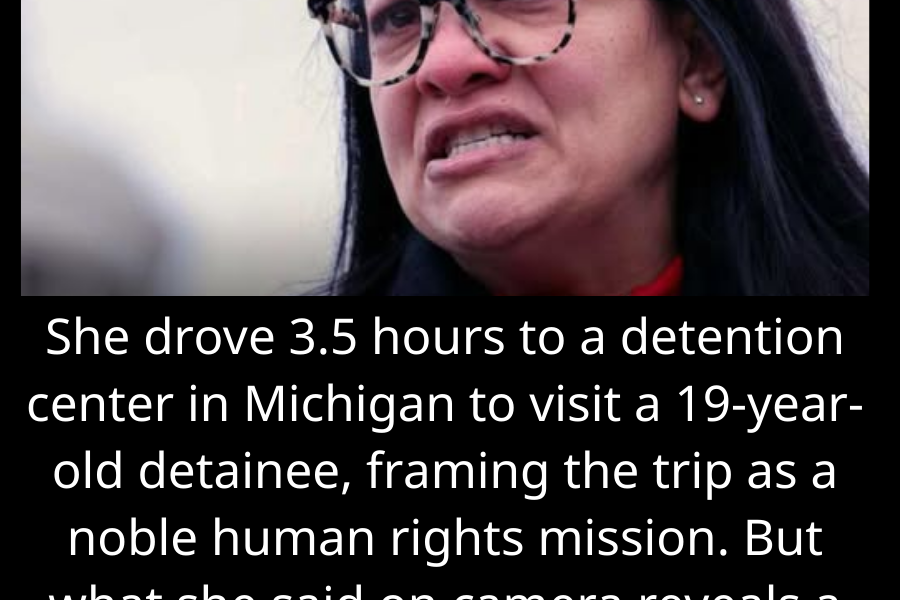
Congresswoman Rashida Tlaib didn’t issue a press release from Washington. She drove three and a half hours from Detroit to Baldwin, Michigan. She stood outside the Northlake Detention Center—a place whose very name conjures isolation and containment—and she did two things simultaneously:
-
Performed her official duty: “I came here to do my job of oversight.”
-
Declared a local insurgency: “We’re going to push back against ICE, get them off our streets.”
She merged the constitutional role of the legislator with the moral stance of the community shield. She blurred the line between Washington and Wayne County, turning a federal detention facility into a local grievance.
Part I: The Geography of the Grievance – “3.5 hours outside of Detroit”
That distance is a critical detail. It’s not trivia. It’s evidence.
It says: This facility is hidden. It’s placed far from the urban centers, the legal aid societies, the community networks, the prying eyes of the media. Its geography is a feature of its function: to isolate, to disorient, to remove people from the ecosystem of support.
By highlighting the drive, Tlaib underscores the deliberate inaccessibility of the system she’s overseeing. She didn’t take a subway to a hearing. She embarked on a pilgrimage to a remote outpost of federal power. Her presence there is itself an act of reconquest.
Part II: The Framing of “Accountability” – Inverting the Power Dynamic
Her promise to “hold them accountable” is a profound power play. In the standard frame, ICE holds people accountable for immigration violations. The courts hold ICE accountable to the law.
Tlaib inserts herself and her community as a third, parallel authority. Her “accountability” isn’t just legal or procedural. It’s political and moral. She is saying the community itself will be the judge and jury of ICE’s conduct within its bounds.
This reframes ICE agents not as neutral law enforcement, but as occupying forces whose presence on “our streets” is itself a condition to be remedied. “Get them off our streets” is not a policy proposal for reforming immigration enforcement. It is a demand for withdrawal, akin to a community demanding the removal of a controversial police unit.
Part III: The Personalization – “My 19 year old resident”
This is the emotional and political core. She doesn’t say “a constituent” or “a detainee.” She says “my 19 year old resident.”
The possessive pronoun “my” is a claim of ownership and responsibility that supersedes the federal government’s claim of custody. “Resident” is a word of belonging, of domicile—the exact opposite of “detainee” or “alien.” It says: This young man belongs to Detroit. He is one of ours. You have taken him from his home and placed him here, in this remote facility. And I, his representative, have come to get him back.
It transforms an immigration case into a story of kidnapping and rescue. It localizes a national policy into a specific, human theft from a specific city.
The Verdict: Oversight as Resistance
Tlaib’s act redefines congressional “oversight.” It’s not a dry review of paperwork in a committee room. It is bearing witness at the site of the injury. It is using the platform of her office to amplify a local cry of protest into a national headline.
She is performing a specific, potent type of politics: the politics of presence and declaration.
-
Presence: Showing up at the physical location of contested power.
-
Declaration: Stating, on camera, in front of the walls, what the new rules of engagement will be.
Her critics will call it a stunt, an empty gesture that changes no laws. But they misunderstand the objective. The goal isn’t to pass a bill today. The goal is to re-map the political imagination of her community. To say: This detention center is not a neutral federal facility. It is an unwelcome occupation. And I, your representative, am here at the gate, declaring it so.
She isn’t just visiting a detention center. She is establishing a picket line around it. The oversight isn’t of the facility’s conditions; it’s a challenge to its very right to exist on Michigan soil. Her final line—”keep our families together”—isn’t just a sentimental plea. It’s a doctrine: the integrity of the local community trumps the federal prerogative to dismantle it.
This is policy as protest. The hearing isn’t in Rayburn. It’s in the Baldwin parking lot. 🎤⚖️🚫