The Theater of Chaos: When a Political Thriller Becomes a National Nervous Breakdown
The Performance of a Lifetime
Let’s be brutally clear from the outset: This didn’t happen.
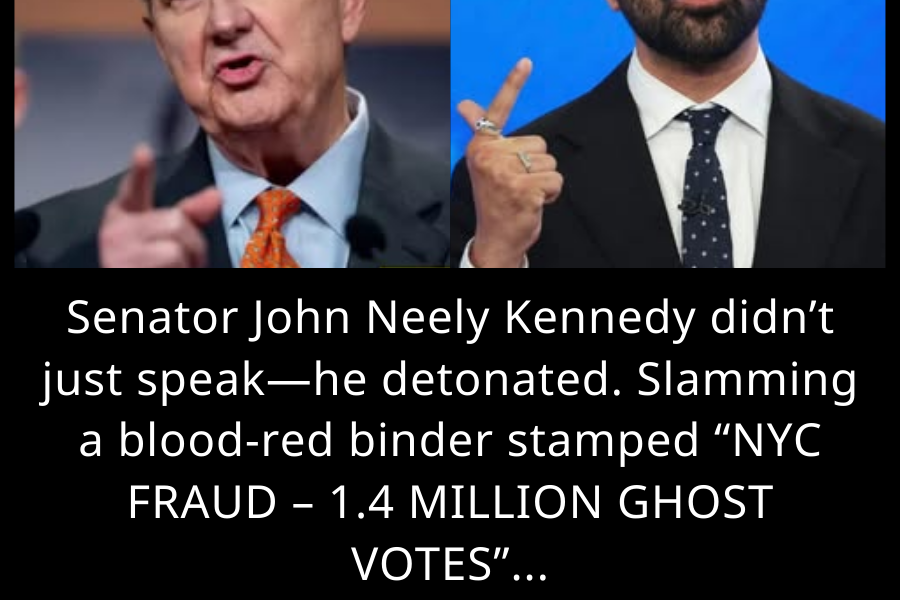
Senator John Kennedy did not storm a hearing with a blood-red binder. Mayor Zohran Mamdani is not in federal custody. The 8th Circuit Court did not rule on this because there is no case. The 1.4 million “ghost votes” timestamped at 3:14 a.m. are a narrative device, not evidence.
But that is precisely what makes this piece of viral fiction—this masterfully engineered political fan-fiction—so dangerous, so revealing, and so indicative of our collective nervous breakdown. It’s not a news report; it’s a speculative thriller written in the grammar of our deepest political anxieties. And in 2026, the line between the two has been atomized.
We must analyze this not as journalists, but as cultural diagnosticians. This story is a fever dream, and the fever is the point.
Deconstructing the Weaponized Narrative: A Playbook in Plain Sight
This fictional account is a perfect archetype, a Frankenstein’s monster stitched together from the limbs of every major political conspiracy of the last decade. It’s a playbook for undermining legitimacy, and its components are chillingly effective:
1. The Prop (The Red Binder): Substance is replaced by symbolism. A thick, ominously labeled binder is more powerful than a thousand-page PDF. It suggests proof too voluminous to ignore, bypassing the need to actually present any. It’s Q-Anon’s mythical servers, Trump’s “big, beautiful health care plan,” made tactile.
2. The Impossibly Precise Lie (“1.4 million, 3:14 a.m., same printer, same ink”): The lie is granular, technical, and therefore feels “insider.” It mimics the language of forensic audit reports. The specificity is a shield against skepticism—who would make up such a detailed number? It’s a classic disinformation tactic: overwhelm with fabricated “data.”
3. The Cinematic Villain Arc (The Burning Warehouse, the U-Hauls): This is heist-movie logic. The conveniently destroyed evidence, the shadowy midnight transfer—these are plot points from The Dark Knight or Mission: Impossible. They translate the boring, procedural reality of election administration (warehouses, printers, trucks) into a sinister, coordinated plot. The “Starlink footage” detail is a brilliant, modern touch, lending a false sheen of techno-verification.
4. The Public, Performative Accusation (“ARREST THAT MAN!”): This bypasses institutions entirely. It’s not a referral to the DOJ. It’s a direct, televised call for mob justice. The pointed finger is the ultimate meme-able moment, reducing complex due process to a primal scene of accusation and condemnation. It transforms a senator into a prosecutor, judge, and jury.
5. The Instant Validation Loop (Bondi on Fox, Trump on Truth Social): The fictional narrative creates its own perfect media ecosystem. The explosive allegation is immediately “confirmed” by authoritative figures within the same ideological universe (Bondi announcing raids, Trump amplifying). This creates a closed informational circuit where the story validates itself in real-time, leaving no room for external fact-checking to catch up.
6. The Cultural Detonation (#KennedyPointsAtMamdani): The story is engineered for virality first, truth second. The hashtag, the imagery, the clash (AOC’s scream of “RACIST!”), are all optimized for engagement. The facts become irrelevant; the emotional spectacle is the product.
The Real Target Isn’t Mamdani. It’s Reality.
Zohran Mamdani, in this fiction, is a composite symbol: a young, progressive, Muslim politician of color, backed by groups like CAIR, winning in America’s largest city. The allegation isn’t just that he cheated. It’s that his entire political identity is inherently illegitimate.
The story weaponizes every existing fracture:
-
Urban vs. Rural: The “heist” is in NYC, the coastal elite metropolis distrusted by much of the country.
-
Socialism vs. Capitalism: Mamdani is framed as a “socialist” stealing from the “real” America.
-
Faith and Identity: The “dirty money” tied to “CAIR shells” directly invokes the “Islam-is-incompatible” narrative we previously dissected.
-
Populist vs. Establishment: Kennedy, the folksy outsider, taking on a corrupt, entitled political heir (“daddy’s trust fund”).
This fiction doesn’t just allege election fraud. It alleges a silent coup by the very demographics that a portion of America already fears are changing the nation’s character.
The Chilling Genius: The Pre-Bunked “Cover-Up”
The most perniciously clever element is the story’s built-in defense mechanism. By stating the incriminating warehouse “conveniently burned down,” it pre-emptively dismisses the lack of evidence. Any official who later says “We found no proof” can be dismissed: “Of course you didn’t—they burned it all!” It’s a narrative trap that can never be sprung, because the story destroys the very possibility of exoneration within its own logic.
The Verdict: We Are Living in the Echo
While this specific event is fabricated, the template is horrifyingly real. We have seen its components deployed: the theatrical binders (see: Giuliani in Pennsylvania), the precise, false numbers (“138,339 votes” in Georgia), the cries to “arrest” opponents, the instant validation via aligned media.
This viral fiction is a stress test for democracy. It asks: What happens when a significant portion of the electorate consumes politics not as a contest of ideas, but as an ongoing, apocalyptic thriller where their side are the heroes uncovering a conspiracy, and the other side are literal criminals?
The answer is playing out in real-time: Erosion of trust. Delegitimization of outcomes. The normalization of political violence as justified defense.
The final line of the fictional piece holds the terrifying truth: “In the age of viral outrage, truth often arrives last, if it arrives at all.”
This story is a weapon. Its shrapnel isn’t made of facts, but of fear, outrage, and tribal solidarity. And in the marketplace of attention, where engagement is currency, this weapon is more valuable, more tradable, and more destructive than any boring, complicated truth could ever be.
The red binder is empty. But the audience is already convinced it’s full. And in politics today, perception isn’t just reality—it’s the only currency that matters. The show has already been cast, the lines rehearsed, and the next national nervous breakdown is just one viral script away.